Top 3 Business Process Improvement Methodologies for Faster Results

Lean, Six Sigma, and Kaizen stand out as the top business process improvement methodologies for organizations seeking rapid results. Businesses worldwide continue to increase their investment in these methods, with the Lean Six Sigma market projected to reach $2.5 billion by 2026. Systematic approaches drive measurable gains across industries. Recent studies show that structured process improvement delivers significant benefits:
Benefit | Description |
|---|---|
Faster task completion allows teams to focus on higher value-added activities. | |
Reduced inefficiencies | Identifying and eliminating redundant tasks improves workflow and operations. |
Increased quality | Optimizing production processes minimizes errors, ensuring consistent quality standards. |
Reduced costs | Streamlining operations reduces operational expenses by eliminating waste and errors. |
Improved customer satisfaction | Consistent quality and timely delivery strengthen customer trust and loyalty. |
Adaptability and agility | Optimized processes enable better adaptation to regulations and market opportunities. |
Competitive advantage | Continuous process improvement positions organizations better in the marketplace. |
Many other approaches exist, but these three lead for speed and impact. Readers will find practical steps and real-world examples to accelerate process improvement.
Key Takeaways
Lean methodology focuses on maximizing customer value while minimizing waste. It helps organizations streamline operations for faster results.
Six Sigma emphasizes data-driven decisions to reduce defects and improve quality. This approach leads to measurable improvements in processes.
Kaizen promotes continuous, incremental improvements. It encourages all employees to identify small changes that can enhance efficiency over time.
Implementing Lean involves steps like leadership participation, employee training, and celebrating small wins to build momentum.
Six Sigma uses the DMAIC framework (Define, Measure, Analyze, Improve, Control) to solve problems quickly and effectively.
Kaizen events bring teams together for focused improvement sessions, leading to quick wins and increased engagement among employees.
Organizations should choose a methodology based on their goals, resources, and the complexity of the challenges they face.
Combining Lean, Six Sigma, and Kaizen can maximize results by leveraging the strengths of each approach for continuous improvement.
Lean Methodology
Lean Principles
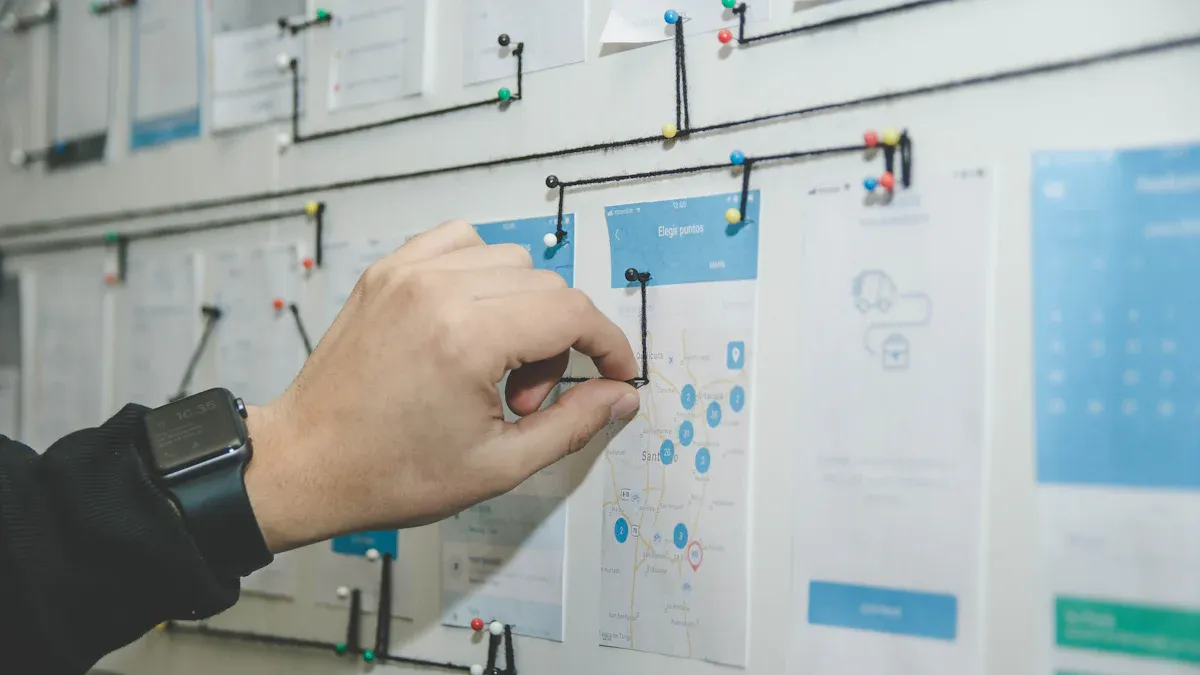
Lean methodology focuses on maximizing value for customers while minimizing waste. Organizations use Lean to streamline operations and accelerate results. The core principles guide teams and systems to identify what matters most and remove unnecessary steps. The following table summarizes these principles and their impact:
Core Principle | Contribution to Business Results |
|---|---|
Defining Value | Aligns products and services with customer needs. |
Mapping Value Stream | Reveals inefficiencies and waste in processes. |
Creating Flow | Reduces delays and interruptions for smoother operations. |
Establishing Pull | Matches production to customer demand, improving responsiveness. |
Pursuing Perfection | Drives continuous improvement for long-term excellence. |
Lean principles help organizations achieve goals quickly and sustainably. Teams focus on activities that add value, and mapping the value stream uncovers bottlenecks and inefficiencies. Systems and teams that apply Lean principles often see faster results because they target waste and optimize workflow.
Eliminating Waste
Lean methodology emphasizes the removal of waste from every process. Waste includes unnecessary steps, excess inventory, and defects. Teams identify these areas and take action to eliminate them. This approach leads to faster task completion and improved efficiency.
Value Stream Mapping
Value stream mapping allows teams to visualize the entire process from start to finish. They pinpoint bottlenecks and areas where resources are wasted. Systems benefit from this technique by gaining a clear understanding of how work flows and where improvements can be made.
Lean Implementation Steps
Organizations seeking rapid Lean implementation follow a series of steps:
Lead by Example: Leadership participates in Lean actions and Kaizen events.
Provide Training & Education: Staff learn the reasons for Lean and gain motivation.
Empower Employees to Identify Waste: Teams suggest improvements and share ideas.
Celebrate Small Wins: Recognize accomplishments with incentives.
Make Lean Part of Daily Work: Embed Lean in meetings and visual aids.
Build a Safe Feedback Environment: Employees share issues without fear.
Planning and preparation start the process. Teams identify target areas for improvement and assemble cross-functional groups to focus on specific problems. They use techniques like the 'Five Whys' to uncover root causes. Systems that follow these steps achieve faster results and sustain improvements.
Identifying Quick Wins
Teams look for opportunities where small changes deliver immediate benefits. Quick wins boost morale and demonstrate the value of Lean. Systems that prioritize these wins accelerate progress and build momentum.
Team Engagement
Engaged teams drive Lean success. Employees participate in identifying waste and suggesting improvements. Systems that foster collaboration and open communication achieve faster and more sustainable results.
Lean Success Stories
Manufacturing Example
Manufacturing companies use Lean to implement just-in-time inventory systems, reducing storage costs and minimizing waste. Cellular manufacturing structures decrease material movement, and poka-yoke systems lower defect rates. Clients at systems and teams have reported faster production cycles and improved quality by applying these Lean principles.
Service Example
Service organizations, such as healthcare providers, simplify processes to reduce waiting times and standardize procedures. For example, the Mayo Clinic streamlined patient care, resulting in shorter wait times and fewer appointment cancellations. Retail and e-commerce systems optimize inventory and warehouse design, improving order delivery speed. Teams in these sectors achieve measurable improvements in efficiency and customer satisfaction.
Six Sigma Methodology
Six Sigma stands as one of the most effective Business Process Improvement Methodologies for organizations seeking measurable and rapid results. Systems and teams use Six Sigma to reduce defects, improve quality, and accelerate process improvement. Clients at systems and teams have reported significant gains by applying Six Sigma principles and tools.
Six Sigma Principles
Six Sigma relies on several fundamental principles that drive fast and sustainable improvements:
Focus on the Customer: Teams identify customer needs to deliver quality products and services.
Use Data and Facts: Systems rely on data to measure improvements in quality and efficiency.
Improve Processes: Teams map processes to find inefficiencies and areas for improvement.
Reduce Variation: Systems minimize variation to decrease defects and waste.
Continuous Improvement: Teams pursue ongoing efforts to enhance processes for lasting success.
Data-Driven Decisions
Six Sigma emphasizes data-driven decisions. Teams collect and analyze data to pinpoint root causes of problems. This approach ensures that improvements are based on facts, not assumptions. Systems use statistical tools to monitor progress and measure outcomes.
Tip: Teams that use data to guide decisions achieve faster and more reliable results.
DMAIC Framework
DMAIC stands for Define, Measure, Analyze, Improve, and Control. Teams follow this structured framework to solve problems quickly:
Define: Identify the problem and set clear goals.
Measure: Gather data to understand the current process.
Analyze: Find the root causes of issues.
Improve: Implement solutions to address the causes.
Control: Monitor the process to sustain improvements.
Systems and teams that use DMAIC accelerate process improvement by focusing on high-impact changes.
Six Sigma Implementation Steps
Rapid deployment of Six Sigma requires a clear plan and strong commitment. Teams and systems follow these steps:
Strong Leadership Commitment: Management supports Six Sigma visibly.
Clear Communication & Vision: Everyone understands the objectives.
Proper Training & Skill Development: Employees learn Six Sigma tools and methods.
Choosing the Right Projects: Teams select projects with measurable outcomes.
Celebrating Wins & Recognizing Efforts: Successes are acknowledged to maintain momentum.
Rapid Problem Identification
Teams use process mapping and statistical analysis to identify problems quickly. Systems apply control charts and capability analysis to detect variation and defects. This rapid identification allows teams to act fast and achieve results.
Technique | Purpose | Evidence of Effectiveness |
|---|---|---|
Control Charts | Monitor process stability and detect variation over time. | Helps distinguish between normal variation and signals that require action. |
Capability Analysis | Compare output distribution spreads against specification limits. | Identifies stability issues; indices under 1.0 indicate excessive variation. |
Error Proofing | Prevents defects by containing risks in product flows. | Reduces abnormal, out-of-spec conditions, leading to fewer defects. |
Teams have reduced dimension variation by 60%. Late deliveries dropped by 45%. Test precision improved seven-fold. Erroneous result rates decreased from 1.2% to under 0.4% in six weeks.
High-Impact Projects
Systems and teams select projects that align with strategic goals. Teams focus on areas where improvements deliver the greatest benefits. Clients at systems and teams have seen rapid gains by targeting high-impact projects.
Six Sigma Case Studies
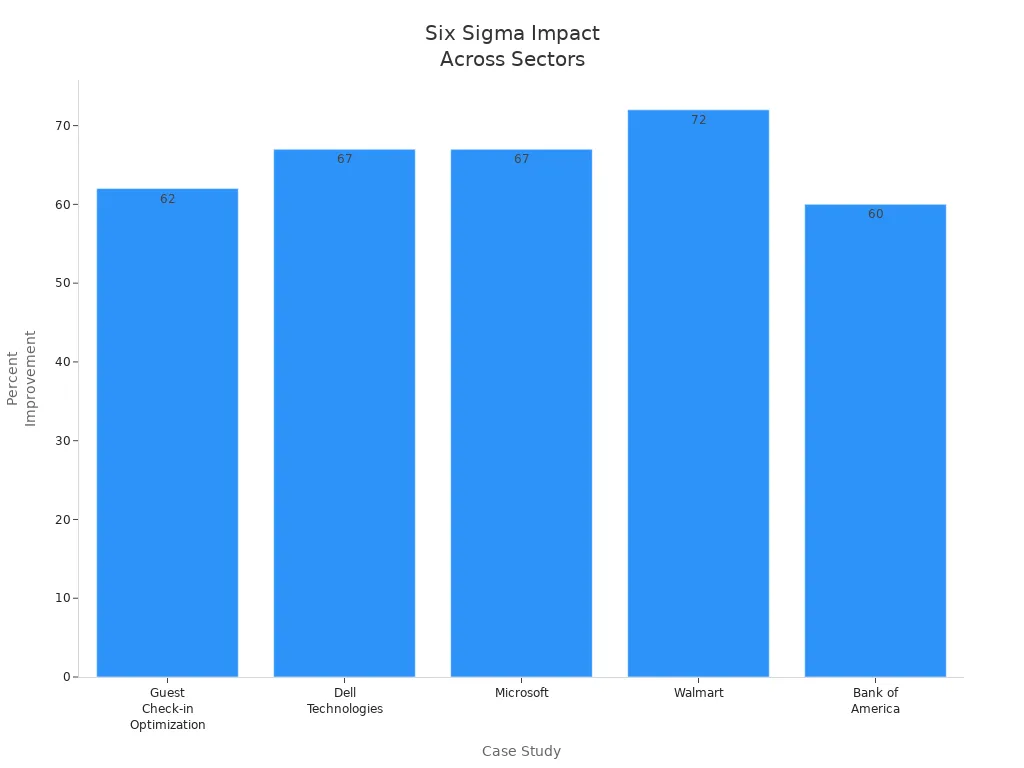
Six Sigma delivers fast and measurable results across industries. The following case studies show how systems and teams have implemented Six Sigma for rapid process improvement:
Case Study | Industry | Problem | Results | Impact |
|---|---|---|---|---|
Guest Check-in Optimization | Hospitality | Long check-in times | Reduced from 8.5 to 3.2 minutes (62% improvement) | Increased guest satisfaction scores by 28% |
Dell Technologies | Technology Manufacturing | Long lead times and high inventory costs | Reduced order-to-delivery time from 21 to 7 days, $47M annual savings | Improved supplier performance ratings by 34% |
Microsoft | Software Development | High defect rates | 67% reduction in post-release defects, 40% faster time-to-market | N/A |
Walmart | Retail | Stock-outs and overstock | Stock-out rate decreased from 6.8% to 1.9% (72% improvement) | Released $125M in working capital |
Bank of America | Financial Services | Long cycle times in mortgage processing | Processing time reduced from 45 to 18 days (60% improvement) | Net Promoter Score improved by 35 points |
Healthcare Example
Healthcare systems and teams use Six Sigma to reduce errors and improve patient care. For example, teams at hospitals have decreased erroneous result rates from 1.2% to under 0.4% in six weeks. These improvements lead to safer and more efficient care.
Manufacturing Example
Manufacturing clients at systems and teams have applied Six Sigma to reduce variation and defects. Dell Technologies reduced order-to-delivery time from 21 to 7 days and saved $47 million annually. Teams improved supplier performance ratings by 34%. These results show the speed and impact of Six Sigma in manufacturing.
Six Sigma accelerates process improvement by focusing on data, structured frameworks, and high-impact projects. Systems and teams that use Six Sigma achieve rapid gains and sustain long-term success.
Kaizen Methodology
Kaizen Principles
Continuous Improvement
Kaizen, a Japanese term meaning "good change," stands as a practical philosophy that encourages everyone in an organization to seek small, ongoing improvements. This approach expects each individual to identify and implement low-cost enhancements in their daily work. Over time, these small changes add up, leading to significant improvements in efficiency and quality. Kaizen supports a culture where both management and employees participate in everyday changes, making continuous improvement a shared responsibility.
Incremental Changes
Kaizen focuses on incremental changes rather than large, disruptive shifts. Teams and systems work together to make small adjustments that improve processes step by step. This method allows organizations to adapt quickly and see immediate gains. The process follows the PDCA (Plan-Do-Check-Act) cycle, which helps teams identify areas for improvement, test solutions, and standardize successful practices. By repeating this cycle, organizations foster a culture of innovation and ongoing progress.
Kaizen principles include knowing your customer, streamlining processes, conducting Gemba walks (observing work where it happens), empowering people, and maintaining transparency.
Kaizen Techniques
Kaizen Events
Kaizen events, sometimes called "Kaizen blitzes," are focused improvement sessions where teams address specific problems over a short period. These events bring together employees from different departments to brainstorm solutions, implement changes, and measure results. Quick wins from these events keep teams motivated and engaged. Problems get solved fast, waste becomes obvious, and operators buy in to the new processes. Metrics often improve rapidly, showing the value of these concentrated efforts.
Daily Practices
Daily Kaizen practices encourage everyone to look for small ways to improve their work. Employees suggest ideas, test changes, and share results with their teams. This approach strengthens communication and transparency within the organization. Systems and teams that use daily Kaizen practices often see better cost control, reduced waste, and higher morale. The focus on many small projects leads to greater overall savings and efficiency.
Kaizen Technique | Benefit |
|---|---|
Kaizen Events | Fast problem-solving and quick wins |
Daily Practices | Sustained improvement and team engagement |
Kaizen Success Stories
Retail Example
A major retailer used Kaizen to streamline its inventory management. By involving employees in identifying waste and testing new processes, the company reduced stockouts and improved order accuracy. This approach led to better cost control and higher customer satisfaction. Systems and teams in retail settings often report similar gains when they adopt Kaizen techniques.
Office Example
In office environments, Kaizen has helped teams reduce paperwork, shorten approval times, and improve communication. For example, a Swedish regional hospital applied Kaizen for one year and saw better integration of organizational and employee objectives. Structured problem-solving led to more efficient workflows and increased job satisfaction. Clients at systems and teams have also benefited from Kaizen events, which boost morale and encourage ongoing improvement.
Kaizen stands as one of the most effective Business Process Improvement Methodologies for organizations seeking immediate and lasting results. Its focus on continuous, incremental change empowers teams to achieve quick wins and build a culture of excellence.
Comparing Business Process Improvement Methodologies
Speed of Results
Organizations often select process improvement methods based on how quickly they can see results. Lean and Six Sigma both deliver faster outcomes compared to Kaizen. Studies show that Lean can reduce average hospitalization time from 3.6 days to 2.6 days. Six Sigma has achieved a 30% reduction in analysis time for blood tests. Kaizen, while strong in identifying problems and proposing solutions, tends to have slower implementation because it focuses on many small changes over time.
Methodology | Results Description | Speed of Results |
|---|---|---|
Kaizen | High degree of problem identification and solution propositions, but low implementation. | Slower implementation |
Lean | Average hospitalization time decreased from 3.6 days to 2.6 days. | Faster results |
Six Sigma | Achieved a mean reduction of 30% in hemogram analysis time. | Faster results |
Lean and Six Sigma help teams achieve measurable improvements in a shorter period, while Kaizen builds momentum through steady, incremental progress.
Complexity
Each methodology comes with its own level of complexity. Six Sigma stands out as the most complex because it uses quantitative metrics and statistical analysis to minimize defects. Teams need training to use Six Sigma tools effectively. Lean focuses on reducing waste and streamlining processes, which makes it easier to understand and apply. Kaizen encourages small, incremental improvements driven by employees. This approach fosters a culture of engagement and continuous learning.
Six Sigma: Uses data-driven tools and statistical analysis to eliminate defects and reduce process variance.
Lean: Concentrates on eliminating waste and improving workflows for better efficiency.
Kaizen: Promotes continuous improvement through employee engagement and small daily changes.
Six Sigma requires more technical expertise, while Lean and Kaizen are easier for teams to adopt across different departments.
Best Use Cases
Different industries and organizations benefit from these methodologies in unique ways. Starbucks used Kaizen, Lean, and Six Sigma to streamline operations, reduce waste, and improve efficiency. This led to higher customer satisfaction. Ford Motor Company applied Lean and Kaizen principles to improve production cycles and reduce costs, helping the company recover during challenging times.
Lean works best in environments where waste reduction and process speed are top priorities, such as manufacturing and healthcare.
Six Sigma fits organizations that need to reduce defects and improve quality, especially in industries like technology, finance, and healthcare.
Kaizen suits companies aiming to build a culture of continuous improvement, making it ideal for both office and retail settings.
These Business Process Improvement Methodologies offer flexible solutions for a wide range of challenges. Teams can choose the best fit based on their goals, resources, and desired speed of results.
Choosing the Right Methodology
Selecting the right business process improvement methodology requires careful consideration of organizational goals, resources, and the nature of the challenges faced. Teams often start by clarifying their primary objective. Some organizations aim to reduce defects and improve quality. Others focus on eliminating waste or fostering a culture of incremental change. Lean, Six Sigma, and Kaizen each offer unique strengths. Lean targets waste reduction and faster workflows. Six Sigma emphasizes defect reduction and data-driven decisions. Kaizen encourages continuous improvement through small, daily changes.
A practical approach involves evaluating several key criteria. The following table summarizes important factors that guide the selection process:
Criteria | Description |
|---|---|
Primary Objective | Identify if the focus is on reducing defects, eliminating waste, or fostering incremental change. |
Scale of Improvement | Determine if the initiative is large and complex or smaller and faster. |
Team Experience and Resources | Assess the level of training required for the methodology and the accessibility for the team. |
Teams with limited experience may prefer Kaizen or Lean, as these methods require less technical training. Six Sigma suits organizations with access to data analysts and statistical tools. Large-scale projects often benefit from Six Sigma or Business Process Reengineering (BPR), while smaller, quick wins align with Lean or Kaizen.
Note: Organizations should match their improvement goals to the methodology's strengths. Lean works well for rapid waste reduction. Six Sigma delivers measurable quality improvements. Kaizen builds a culture of ongoing change.
Other methodologies, such as PDCA (Plan-Do-Check-Act), Total Quality Management (TQM), Theory of Constraints (TOC), and 5S, provide additional options. PDCA offers a simple cycle for continuous improvement. TQM focuses on quality across all functions. TOC addresses bottlenecks in processes. 5S organizes workplaces for efficiency.
Teams should also consider the scale of improvement needed. Large, complex changes may require structured approaches like Six Sigma or BPR. Smaller, frequent improvements fit Kaizen or Lean. Accessibility and training play a role. Lean and Kaizen are easier for teams to adopt without extensive training. Six Sigma demands specialized skills.
Organizations benefit from reviewing past successes and failures. They analyze which methods delivered the best results in similar situations. Teams often combine approaches for greater impact. For example, Lean and Six Sigma together can streamline processes and reduce defects.
Choosing the right methodology empowers teams to achieve faster results and sustain improvements. Clear objectives, proper assessment of resources, and understanding the scale of change help organizations make informed decisions.
Selecting the Best Methodology
Assessing Needs
Every organization faces unique challenges. Teams must assess several factors before choosing a process improvement methodology. Leaders identify the main objective. Some want to reduce defects, others aim to eliminate waste, and many hope to foster incremental change. The scale of improvement matters. Large, complex projects often require structured approaches. Smaller, faster improvements benefit from simpler methods. Team experience and available resources also influence the decision. Six Sigma demands specialized training. Kaizen and Lean are more accessible and can be implemented with less preparation.
Primary objective: Reduce defects, eliminate waste, or encourage incremental change.
Scale of improvement: Large initiatives suit Six Sigma or BPM. Small, quick wins fit Kaizen or PDCA.
Team experience and resources: Six Sigma needs skilled practitioners. Kaizen and Lean work well with broader teams.
Teams that assess these factors make informed choices and achieve better results.
Matching Goals
Organizations match their goals with the strengths of Lean, Six Sigma, or Kaizen. Each approach offers distinct advantages. Lean focuses on cutting out waste. Kaizen encourages daily improvements. Six Sigma aims to reduce errors to nearly zero. The following table shows how each methodology aligns with specific goals and examples:
Approach | Goal | Example | Best For |
|---|---|---|---|
Lean | Cut out waste (time, effort, cost) | A small manufacturer saved 20% costs by redesigning workflows. | Processes that feel slow, messy, or expensive |
Kaizen | Continuous, daily improvements | Toyota employees suggested moving a parts bin, saving hundreds of hours. | Building a culture of innovation |
Six Sigma | Reduce errors to nearly zero | GE saved $12 billion using Six Sigma in the 1990s. | Quality-critical industries like healthcare |
Teams select the methodology that best fits their goals. Lean suits organizations seeking efficiency. Kaizen works well for those building a culture of innovation. Six Sigma benefits industries where quality is critical.
Combining Approaches
Many organizations combine Lean, Six Sigma, and Kaizen to maximize results. This blended strategy leverages the strengths of each method. Kaizen fosters continuous improvement and strong employee engagement. Lean reduces waste and improves efficiency. Six Sigma enhances quality and consistency through data-driven approaches. The table below outlines the advantages and challenges of each methodology:
Methodology | Advantages | Challenges |
|---|---|---|
Kaizen | Fosters a culture of continuous improvement and strong employee engagement | May require a shift in organizational culture to fully embrace bottom-up initiatives |
Lean | Reduces waste and improves efficiency, leading to higher customer satisfaction | Implementation can be complex and may face resistance from employees |
Six Sigma | Enhances quality and consistency through data-driven approaches | Requires specialized skills and can create a top-down approach that may not engage all employees |
Combining approaches allows teams to address multiple goals. They build a culture of improvement, increase efficiency, and ensure high quality.
Teams that blend methodologies adapt quickly and sustain improvements. Leaders encourage collaboration and continuous learning. Organizations achieve faster results and maintain long-term success.
Actionable Steps for Process Improvement
Getting Started
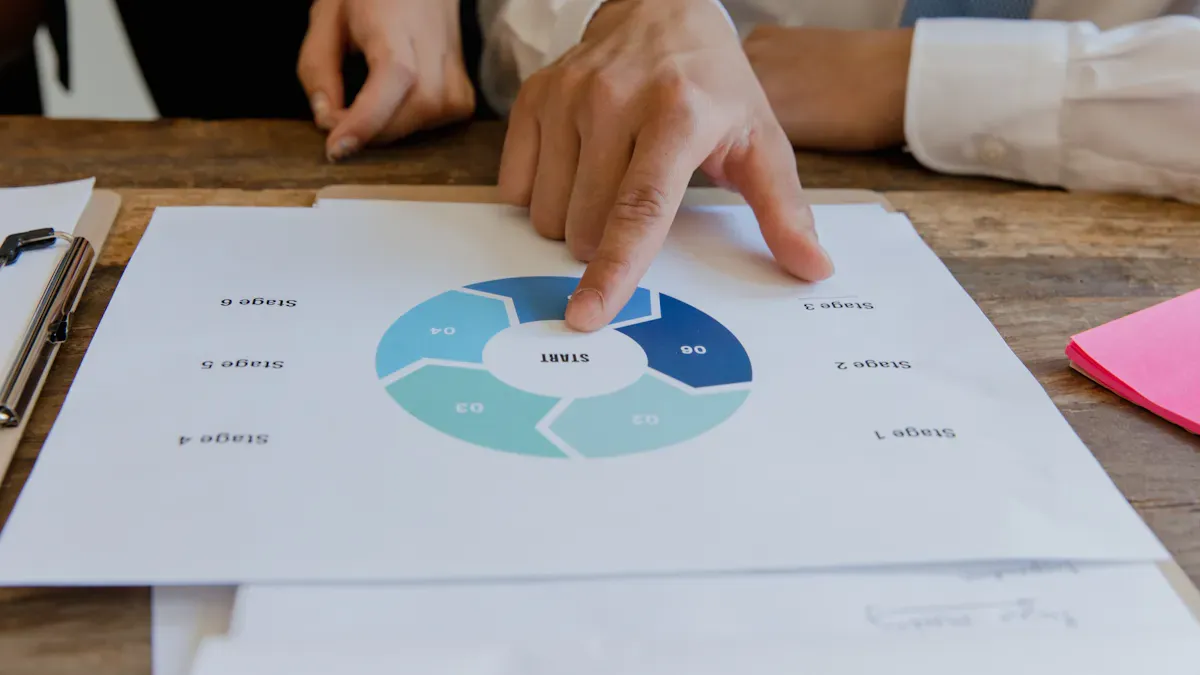
Organizations can begin process improvement by following a clear set of steps. First, leaders assemble a cross-functional team. This team includes front-line associates and managers. Each member brings a unique perspective, which helps capture valuable insights. Next, the team documents the current process. They compare what actually happens with what should happen. This step helps identify gaps and areas for improvement. After documenting the process, the team analyzes it to find waste. They look for unnecessary steps, delays, or errors. Finally, the team brainstorms solutions together. They generate ideas to address the waste and improve efficiency.
Key steps to get started:
Assemble a cross-functional team.
Document the current process and compare expected vs. actual workflows.
Identify waste in the process.
Brainstorm solutions as a team.
Teams that follow these steps create a strong foundation for improvement and ensure that all voices are heard.
Building Improvement Culture
A culture of continuous improvement helps organizations achieve lasting success. Management commitment stands as a crucial factor. Leaders must show support for improvement efforts. Employee empowerment also plays a key role. When employees feel empowered, they contribute more ideas and take ownership of changes. Structured programs, such as regular meetings and clear communication, help teams plan and track progress. Continuous monitoring ensures that improvements have a real impact.
Evidence-Based Practice | Description |
|---|---|
Management Commitment | Top management must support continuous improvement. |
Employee Empowerment | Employees should feel encouraged to contribute ideas. |
Structured Programs | Clear communication and defined priorities guide improvement efforts. |
Continuous Monitoring | Teams measure the impact on key indicators. |
Building this culture takes time. Teams must identify the behaviors they want to see. Training, feedback, and support help reinforce these behaviors. Over time, organizations see better customer satisfaction and sustainable growth.
Sustaining Results
Sustaining process improvements requires ongoing effort. Organizations set clear work standards to ensure consistency. Regular employee training keeps everyone updated on best practices. Ongoing monitoring, such as 5S audits, helps maintain improvements. Teams use daily huddles to review progress and align priorities. Leaders perform Gemba walks to observe work and support problem-solving. Leader standard work routines and documented best practices help institutionalize improvements.
Strategy | Description |
|---|---|
Defining Work Standards | Clear standards ensure consistent and efficient work. |
Regular Employee Training | Ongoing training keeps skills and knowledge current. |
Ongoing Monitoring Mechanisms | Regular evaluations, such as 5S audits, help maintain improvements. |
Organizations that empower employees to identify opportunities and experiment with new ideas maintain excellence over time. Leadership recognition and support encourage teams to keep improving.
Lean, Six Sigma, and Kaizen each deliver rapid results through unique strengths. The table below highlights their core advantages:
Methodology | Strengths |
|---|---|
Lean | Eliminates waste, improves flow, and boosts efficiency for faster value delivery. |
Six Sigma | Reduces defects and variation, using data to drive quality and consistency. |
Kaizen | Empowers teams to make small changes, building a culture of continuous improvement. |
To select the best approach, teams should:
Align the methodology with business goals and industry needs.
Gather feedback and analyze data to identify improvement areas.
Engage leadership and employees to overcome resistance and sustain momentum.
Business Process Improvement Methodologies succeed when organizations act quickly, foster a culture of improvement, and leverage expert resources. For more guidance or to achieve similar results, reach out to systems and teams. Explore trusted resources and training to support your journey.
FAQ
What is the main goal of business process improvement?
Business process improvement aims to make work faster, easier, and more efficient. Teams use it to remove waste, reduce errors, and deliver better results for customers.
How do Lean, Six Sigma, and Kaizen differ?
Lean removes waste. Six Sigma reduces errors using data. Kaizen encourages small, daily improvements. Each method helps teams improve processes, but they use different tools and focus areas.
Can small businesses use these methodologies?
Yes. Small businesses can apply Lean, Six Sigma, or Kaizen. They can start with simple steps, such as mapping processes or encouraging employee suggestions. These methods do not require large budgets.
How long does it take to see results?
Teams often see results within weeks or months. Lean and Six Sigma can deliver quick wins. Kaizen builds steady progress over time with small changes.
Do these methods require special training?
Some training helps teams use these methods well. Lean and Kaizen are easy to learn. Six Sigma may need more training because it uses data and statistics.
Can teams combine Lean, Six Sigma, and Kaizen?
Yes. Many organizations blend these methods. They use Lean to cut waste, Six Sigma for quality, and Kaizen for daily improvements. This approach gives the best results.
What are common challenges in process improvement?
Teams may face resistance to change or lack of support from leaders. Clear goals, good communication, and leadership support help overcome these challenges.
Where can teams find more resources?
Teams can find resources through books, online courses, and industry groups. Many organizations offer training and guides for Lean, Six Sigma, and Kaizen.


