How to Analyze and Redesign Business Processes for Modern Needs

Business processes form the backbone of how organizations achieve their goals. A well-designed methodology helps teams use resources wisely and build systems that support effective operations. Companies often see benefits such as higher efficiency, reduced costs, and better productivity.
Employees can focus on valuable tasks.
Customers enjoy improved service.
Standardized processes boost engagement and help meet compliance needs.
Key Takeaways
Business processes are essential for achieving organizational goals and improving efficiency.
Identifying and mapping key processes helps teams understand workflows and find areas for improvement.
Involve cross-functional teams in redesign projects to gather diverse insights and expertise.
Use clear metrics and KPIs to measure the success of redesigned processes and track improvements.
Automation tools can streamline repetitive tasks, allowing employees to focus on more valuable work.
Regularly review and adapt processes to keep them relevant and effective in changing environments.
Effective communication with stakeholders builds trust and ensures everyone understands their roles during changes.
Setting clear goals and aligning them with business objectives leads to more successful process redesigns.
Business Processes Overview
What Are Business Processes
Business processes describe a series of linked activities that transform inputs into outputs delivered to customers. These activities often cross functional boundaries and involve multiple departments. Organizations rely on business processes to achieve goals, deliver value, and maintain efficiency. Business process management uses a structured approach to analyze, model, and improve these processes. This approach helps organizations drive outcomes and adapt to changing needs.
Business processes include operational, management, and supporting activities. Each process plays a role in shaping how a company operates and serves its customers.
Linked activities transform resources into products or services.
Processes often involve purchasing, manufacturing, marketing, accounting, and human resources.
Continuous improvement ensures processes stay relevant and effective.
Types of Business Processes
Organizations recognize several categories of business processes. Each category supports different aspects of business operations.
Category | Description |
|---|---|
Core processes | Critical processes that contribute to the creation and delivery of value to customers. |
Operations processes | Involves people, equipment, and procedures in distribution, manufacturing, and service delivery. |
Management processes | Manage overall business operations, including strategic planning and performance management. |
Customer-facing processes | Involves direct interaction with customers, such as marketing and sales. |
Support processes | Support operational and management processes, including HR and IT functions. |
Core Processes
Core processes create and deliver value to customers. These processes include product development, sales, and order fulfillment. Companies focus on core processes to maintain competitiveness and meet customer expectations.
Support Processes
Support processes provide essential services that help core activities run smoothly. Human resources, information technology, and accounting belong to this category. Support processes ensure employees have the tools and resources needed to perform their jobs.
Management Processes
Management processes guide overall business direction. Strategic planning, performance management, and decision-making fall under this group. Leaders use management processes to set goals and monitor progress.
Innovation Processes
Innovation processes drive change and improvement. These processes include research and development, new product design, and process optimization. Organizations use innovation processes to stay ahead in the market.
Key Process Examples
Large enterprises often redesign business processes to improve efficiency and customer experience.
Amazon reduced order processing time by over 60% after redesigning its fulfillment process.
Apple enhanced customer service by changing its retail store experience.
Starbucks improved online ordering, resulting in faster service and happier customers.
United Airlines streamlined check-in and baggage handling for passengers.
Retail companies introduced automated checkout and new customer service desks, shortening wait times.
Healthcare providers reduced patient admission time from three hours to one hour.
Automotive firms cut customer service wait times by up to 50%.
IT companies improved software development, reducing project timelines by 40%.
Banks redesigned loan processing, decreasing approval times by 80%.
Supply chain management teams streamlined logistics and inventory management.
Customer relationship management teams overhauled processes for better insights and service.
These examples show how business processes impact performance and customer satisfaction. Organizations that analyze and redesign processes often see measurable improvements.
Mapping Business Processes
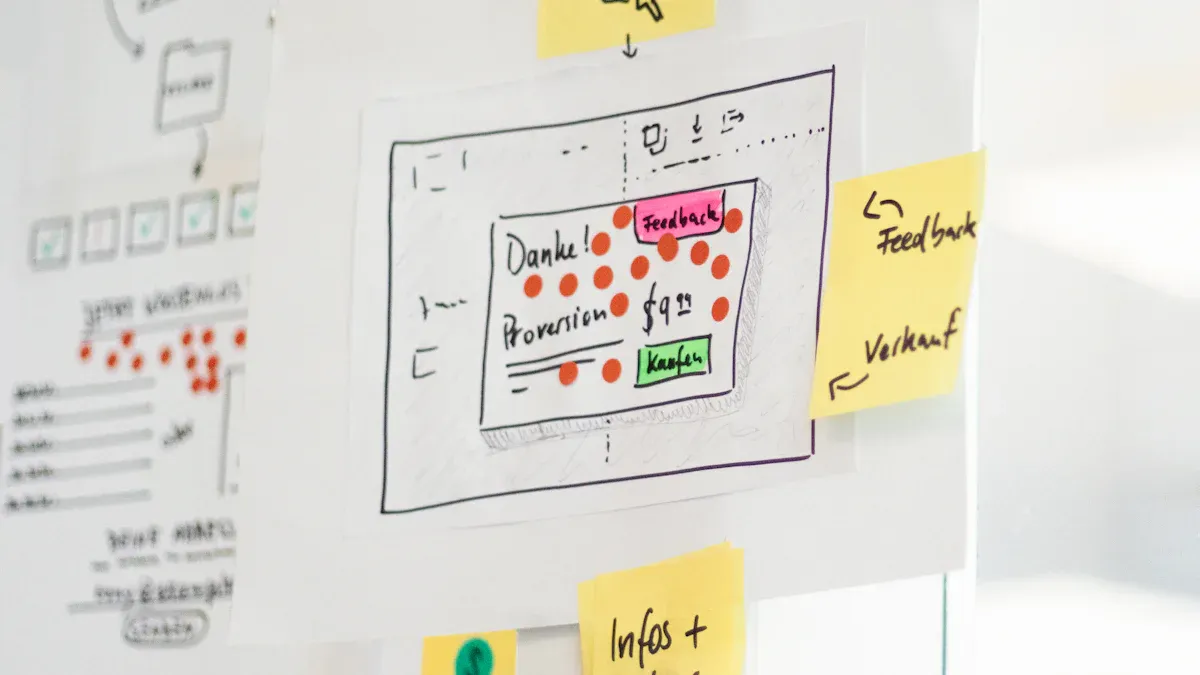
Mapping business processes helps organizations understand how work flows from start to finish. Teams use mapping to break down complex activities into smaller, manageable steps. This approach reveals how each part of a process connects and where improvements can make the most impact.
Identifying Key Processes
Organizations must first identify which processes matter most. They often create a process inventory and score each process based on its impact and potential for improvement. Teams gather for discovery sessions to discuss how each process works. They then map the current state, analyze it, and design a better version. After launching the new process, they measure performance to ensure goals are met.
Create a process inventory and score each process.
Hold a discovery session with a diverse team.
Map the current state of the process.
Analyze and redesign for a better future state.
Implement the new process with clear communication.
Measure and monitor performance using key metrics.
A table can help clarify the levels used to identify key business processes:
Level | Purpose | Scope | When to Use |
|---|---|---|---|
Level 1: Process Overview | Provides a high-level view for strategic decision-making. | Shows the complete journey of activities without granular details. | Useful for strategic planning, organizational insight, and high-level decision support. |
Level 2: Process Map | Clarifies departmental roles and interactions. | Focuses on major subprocesses and departmental involvement. | Ideal for departmental managers to understand their contributions to broader goals. |
Tip: Start with a high-level overview before diving into detailed mapping. This approach helps teams see the big picture and avoid missing important connections.
Process Mapping Methods
Teams use different methods to visualize business processes. Each method offers unique benefits and fits different needs.
Flowcharts
Flowcharts use shapes and arrows to show the sequence of steps in a process. Each shape represents a specific action, decision, or outcome. Flowcharts make it easy to spot unnecessary steps or confusing paths. They work well for simple or linear processes.
Swimlane Diagrams
Swimlane diagrams organize process steps into lanes based on who performs each task. Each lane represents a department or role. This method clarifies responsibilities and shows how work moves between teams. Swimlane diagrams help identify handoff delays and gaps in communication.
A table below compares the two main mapping levels:
Level | Description | Purpose |
|---|---|---|
Level 1 | Process Overview | Provides a high-level view of the entire process, focusing on major stages without granular details. |
Level 2 | Process Map | Offers a mid-level view showing key subprocesses and departmental interactions, clarifying responsibilities. |
Note: Effective process mapping breaks down complex activities into smaller parts. This understanding helps teams find areas for improvement and develop better solutions.
Mapping Tools
Many tools support process mapping. Teams often use software like Microsoft Visio, Lucidchart, or Bizagi to create clear diagrams. These tools offer templates for flowcharts and swimlane diagrams. Digital tools make it easier to update maps and share them with others. Some tools also allow real-time collaboration, which helps teams work together more efficiently.
Microsoft Visio: Popular for creating detailed flowcharts and diagrams.
Lucidchart: Cloud-based tool with easy sharing and collaboration features.
Bizagi: Offers advanced process modeling and automation options.
Teams choose tools based on their needs, budget, and the complexity of their business processes. The right tool helps organizations visualize, analyze, and improve how work gets done.
Evaluating Performance
Evaluating performance helps organizations understand how well their processes work. Teams use this step to measure results, find weak points, and gather feedback. This approach supports continuous improvement and ensures that changes deliver real value.
Metrics and KPIs
Metrics and key performance indicators (KPIs) provide clear ways to measure process success. Teams select KPIs that match business goals. Common examples include cycle time, error rates, customer satisfaction, and cost per transaction. Tracking these numbers helps leaders see if a process meets expectations.
Cycle time shows how long a process takes from start to finish.
Error rates highlight mistakes or defects in the process.
Customer satisfaction scores reveal how well the process serves users.
Cost per transaction measures how much each completed process costs.
Teams review these metrics regularly. They use the data to spot trends and decide where to focus improvement efforts.
Finding Bottlenecks
Bottlenecks slow down business processes and reduce efficiency. Teams need to find and fix these issues to keep work flowing smoothly. Several methods help identify bottlenecks:
The 5 Whys technique encourages teams to ask "why" multiple times. This method helps them find the root cause of a problem and prevent it from happening again.
Process mapping gives a visual overview of each step. Teams can see where delays or confusion occur.
Analyzing current processes helps teams spot steps that take too long or cause repeated problems.
Tip: Teams should work together to review process maps and discuss where work piles up or slows down. This collaboration often reveals hidden issues.
Stakeholder Feedback
Stakeholder feedback gives valuable insights into how processes affect people. Organizations use structured methods to collect and analyze this feedback. The table below shows two core components of effective feedback collection:
Core Component | Description |
|---|---|
Stakeholder Debriefing | Involves debriefing all stakeholders shortly after project completion to gather critical feedback. |
Feedback Identification | Structured feedback helps identify operational gaps and cultural issues affecting future success. |
Teams also use these practices to improve feedback collection:
Develop a feedback loop for users and stakeholders to report their experiences.
Use KPIs to track the impact of implemented improvements.
Regularly analyze feedback to refine processes over time.
Collecting feedback ensures that process changes meet the needs of everyone involved. This step supports ongoing improvement and helps organizations adapt to new challenges in business processes.
Setting Redesign Goals
Setting clear goals for business process redesign helps organizations achieve meaningful results. Teams need to connect these goals to the company’s main objectives, define what success looks like, and decide which improvements matter most.
Aligning with Objectives
Every process redesign should support the organization’s broader mission. Teams must ensure that new processes help reach operational and financial targets. Early planning and structured change management reduce resistance and keep everyone focused.
Step | Description |
|---|---|
Develop a plan that involves stakeholders from the start and aligns with redesign objectives. | |
Benchmark your performance | Choose KPIs that match redesign goals and review them regularly for ongoing improvement. |
Establish clear goals and objectives | Set specific targets before starting to ensure alignment with business priorities. |
Tip: Teams that align redesign goals with company objectives see better results and smoother transitions.
Success Criteria
Defining success criteria gives teams a way to measure progress. Success criteria should be specific, measurable, and relevant to the process. Teams often use KPIs such as cycle time, error rates, and customer satisfaction to track improvements. These criteria help leaders see if the redesign delivers the expected benefits.
Set measurable targets for each process.
Use KPIs to track progress and identify gaps.
Review results regularly to ensure improvements last.
A clear set of criteria keeps everyone accountable and focused on outcomes. Teams can adjust their approach if results fall short of expectations.
Prioritizing Improvements
Not all process changes have the same impact. Teams should use proven frameworks to decide which improvements to tackle first. These frameworks help organizations focus on changes that offer the most value.
Framework | Description |
|---|---|
Lean Six Sigma | Combines Lean and Six Sigma to boost efficiency, quality, and reduce waste. |
Focuses on radical redesign for major gains in performance and efficiency. | |
Lean Management | Optimizes processes to maximize customer value and minimize waste. |
Kaizen | Promotes continuous, small improvements involving all employees. |
Total Quality Management (TQM) | Maintains high quality through ongoing improvement and employee involvement. |
Business Process Management | Uses a systematic approach to manage and improve processes for better efficiency and effectiveness. |
Note: Teams that use structured frameworks can prioritize improvements based on impact, resources, and alignment with business goals.
By setting clear goals, defining success, and prioritizing efforts, organizations can redesign processes that drive real progress and lasting value.
Stakeholder Engagement
Team Involvement
Successful business process redesign depends on the active participation of cross-functional teams. Each team brings unique knowledge and experience to the project. Including representatives from sales, management, finance, and other departments ensures that all perspectives are considered. These individuals often serve as subject matter experts and advisors.
The single most significant contributing factor to the success of a redesign project is the inclusion of representatives from each stakeholder team (i.e. sales, management, finance) in the project. Stakeholders are typically subject matter experts and advisors. These individuals must have the authority to make decisions on behalf of their teams, and be willing to invest time outside of their normal day-to-day responsibilities in order to ensure the redesign project’s success.
Teams that involve the right people from the start can identify challenges early. They can also make decisions faster and avoid delays. When team members invest time and energy, the project gains momentum and credibility.
Communication
Clear communication keeps everyone informed and engaged during process changes. Leaders must share updates and explain the reasons for each change. Open communication helps build trust and reduces confusion.
Maintaining open communication
Demonstrating clear benefits
Involving key players throughout the project
Establishing regular communication channels
Providing updates to keep stakeholders informed and engaged
Building awareness of the changes
Ensuring all stakeholders understand their roles in the transition
Teams use meetings, emails, and digital platforms to share information. Regular updates help everyone stay on track. When leaders show the benefits of new processes, they encourage buy-in and support.
Tip: Open communication helps teams address concerns before they become problems.
Managing Change
Managing change requires a structured approach. Leaders must plan for change from the beginning. They should involve people who will be affected and listen to their feedback. This approach helps teams adjust and succeed.
Integrate change management early: Create a structured change management plan from the project's outset.
Engage with impacted people early to gather input on your change management plan.
Establish metrics and feedback loops to monitor the effectiveness of new processes.
Teams track progress using clear metrics. They collect feedback to see what works and what needs improvement. This process helps organizations adapt and improve over time.
A table below summarizes key actions for managing change:
Action | Purpose |
|---|---|
Early planning | Prepares teams for upcoming changes |
Stakeholder engagement | Builds support and gathers input |
Regular feedback collection | Tracks progress and identifies issues |
Effective stakeholder engagement leads to smoother transitions and better results. Teams that focus on involvement, communication, and change management set the stage for lasting improvement.
Technology in Process Improvement

Modern organizations use technology to improve business processes. These tools help teams work faster, reduce mistakes, and stay competitive. Leaders choose technology that fits their needs and supports their goals.
Automation Tools
Automation tools handle repetitive tasks and free up employees for more valuable work. Teams often use several types of automation to improve processes:
Business Process Management (BPM): This discipline uses methods like Lean and Six Sigma to improve how work gets done. BPM helps teams design, monitor, and optimize processes.
Robotic Process Automation (RPA): RPA uses software robots to copy human actions. These robots handle tasks like data entry or moving files between systems. RPA works well for simple, rule-based jobs.
Intelligent Document Processing (IDP): IDP automates how companies handle documents. It reads, sorts, and processes forms or invoices without human help.
RPA is easy to use and connects with old computer systems. BPM focuses on the big picture and may use automation or other methods. Both tools help teams improve, but they work best together.
A table below compares BPM and RPA:
Feature | BPM | RPA |
|---|---|---|
Focus | Process improvement | Task automation |
User-friendliness | May require training | Easy for most users |
Scope | End-to-end processes | Discrete, repetitive tasks |
Technology | May include automation | Software robots |
Digital Workflows
Digital workflows replace paper-based steps with online tools. These workflows guide tasks from start to finish. Employees use digital forms, approvals, and notifications. This approach reduces errors and speeds up work.
Teams track progress in real time.
Managers see where tasks get delayed.
Employees receive reminders for important steps.
Digital workflows also support remote work. Staff can complete tasks from any location. This flexibility helps organizations respond to change quickly.
Security and Compliance
Security and compliance matter when using new technology. Organizations must protect data and follow laws. Teams use several strategies to stay safe:
Train employees on cybersecurity to help them spot risks.
Check vendors for security and compliance before using their tools.
Add security rules to vendor contracts and monitor them.
Review and update security policies often.
Balance new ideas with the need to follow rules.
Regular checks help organizations keep up with changing laws and threats. Employee training builds a strong defense against cyber risks.
By using the right technology, organizations improve processes and protect their data. Teams that focus on automation, digital workflows, and security see better results and fewer problems.
Implementation and Measurement
Steps for Implementation
Organizations achieve successful process redesign by following a structured approach. Systems and teams play a central role in each stage. Clients who use these systems and involve cross-functional teams often see better results. The following steps outline a recommended path for implementing redesigned business processes:
Assemble all stakeholders. Teams from different departments join together to share knowledge and set goals.
Understand the current business process. Systems help collect data and map out existing workflows.
Keep the customer in mind at every stage. Teams focus on delivering value and improving the customer experience.
Gather and analyze data. Systems provide accurate information for decision-making.
Establish meaningful measures. Teams set clear metrics to track progress.
Map out the new process. Visual tools and systems help teams design efficient workflows.
Make recommendations for improvement. Teams use their findings to suggest changes.
Implement recommendations using an agile approach. Systems support quick adjustments and feedback.
Continue to improve the process after implementation. Teams monitor results and refine the process as needed.
Teams that follow these steps can adapt quickly and respond to challenges. Systems provide the structure and data needed for each phase.
Monitoring Outcomes
Measuring the results of process changes helps organizations understand what works. Teams use a variety of metrics to track outcomes. Systems collect and organize this data, making it easier to analyze. The table below shows common metric types and their descriptions:
Metric Type | Description |
|---|---|
Process Efficiency Metrics | Metrics like Cycle Time, Error Rates, and Resource Utilization help track efficiency improvements. |
Financial Impact Metrics | Metrics such as Cost Savings and Revenue Generation quantify the financial benefits of process changes. |
Customer Satisfaction Metrics | Metrics including Customer Feedback and Retention assess the impact of changes on customer experience. |
Employee Engagement Metrics | Metrics like Employee Satisfaction and Productivity measure the workforce's response to process changes. |
Continuous Improvement Metrics | Metrics tracking the Process Improvement Pipeline and Sustainability ensure ongoing effectiveness. |
Teams use these metrics to monitor progress and identify areas for further improvement. For example, the Six Sigma methodology aims to reduce defects to 3.4 per million, which leads to higher quality and lower costs. Systems help teams collect customer feedback, track employee satisfaction, and measure productivity gains. Clients who use these systems can see direct cost savings and increased revenue through better processes.
Continuous Improvement
Continuous improvement means always looking for ways to make processes better. Teams and systems work together to support this ongoing effort. The following points highlight how organizations can build a culture of continuous improvement:
Continuous improvement is an ongoing commitment to refining and enhancing business processes.
Business Process Management (BPM) provides a systematic approach to managing and optimizing these processes.
The synergy between BPM and continuous improvement enables organizations to adapt and thrive in competitive environments.
Continuous improvement fosters a culture that embraces change.
It encourages employees to view challenges as opportunities for growth.
This cultural shift is essential for sustained success in dynamic markets.
BPM enhances efficiency by streamlining workflows and reducing redundancies.
It provides a framework for continuous improvement, maintaining a competitive edge.
Organizations can adapt quickly to changing market conditions through BPM.
Teams that use continuous improvement methods stay flexible and competitive. Systems make it easier to track progress and share results. Clients who invest in both systems and teams create a strong foundation for lasting success.
Business process analysis and redesign help organizations achieve lasting results. Teams see gains in efficiency, quality, and cost savings. The table below highlights the most significant benefits:
Benefit | Description |
|---|---|
Increased efficiency | Streamlining processes can reduce waste, save time, and improve productivity. |
Improved quality | Optimizing operations can lead to higher quality products or services. |
Cost reduction | Eliminating inefficiencies and reducing waste can result in cost savings. |
Enhanced customer satisfaction | Improved operations can lead to faster response times, better service, and increased customer satisfaction. |
Ongoing evaluation and adaptation keep processes strong. Practical tools and regular reviews support continuous improvement. For more guidance, readers can contact the organization’s experts.
FAQ
What is business process analysis?
Business process analysis examines how work gets done in an organization. Teams study each step to find problems or delays. This helps leaders understand where to make improvements for better results.
Why should a company redesign its business processes?
Companies redesign processes to improve efficiency, reduce costs, and meet new goals. Redesign helps teams adapt to changes in technology, customer needs, or market conditions.
How often should organizations review their business processes?
Organizations should review processes at least once a year. Regular reviews help teams spot problems early and keep processes up to date.
What tools help with process mapping?
Teams use tools like Microsoft Visio, Lucidchart, and Bizagi. These tools create clear diagrams that show each step in a process. Digital tools also support teamwork and easy updates.
How can teams measure process improvement success?
Teams track key performance indicators (KPIs) such as cycle time, error rates, and customer satisfaction. These numbers show if changes lead to better results.
Who should be involved in process redesign projects?
Cross-functional teams work best. They include people from different departments like sales, finance, and management. Each member brings unique knowledge and helps make better decisions.
What role does technology play in process improvement?
Technology automates tasks, speeds up work, and reduces mistakes. Tools like automation software and digital workflows help teams work smarter and stay competitive.
How can organizations handle resistance to process changes?
Leaders should communicate clearly, involve stakeholders early, and provide training. Listening to feedback helps teams adjust and builds trust during transitions.


