How to Select the Right Business Process Improvement Methodology in 2026

Selecting the right Business Process Improvement Methodologies requires careful alignment with business goals and process challenges. Leaders in Business Management use Knowledge from market trends to refine operations. Digital transformation has shifted focus to technology-driven approaches. Companies now prioritize continuous improvement, integrate digital tools, and address rising customer expectations. Sales teams benefit from methodologies that enhance efficiency and agility.
BPR now includes customer experience and organizational agility.
Identifying redundant practices drives effective change.
Modern strategies emphasize teamwork and real-time data.
Key Takeaways
Align your chosen methodology with business goals to improve efficiency and quality.
Consider scalability when selecting a methodology to ensure it grows with your organization.
Evaluate the complexity of the methodology to match your team's experience and resources.
Engage stakeholders throughout the process to reduce resistance and increase support.
Use clear metrics to measure success and track progress in your improvement initiatives.
Implement a structured change management approach to prepare your team for new processes.
Explore hybrid methodologies to address complex challenges effectively.
Regularly review and adapt your strategies to maintain continuous improvement.
What Are Business Process Improvement Methodologies?

Definition and Core Principles
Business Process Improvement Methodologies help organizations analyze, redesign, and optimize their workflows. These approaches guide teams in identifying inefficiencies and making changes that lead to better performance. Several widely recognized methodologies exist as of 2026:
Six Sigma measures defects and improves processes using structured frameworks like DMAIC and DMADV.
Lean Manufacturing reduces costs by eliminating waste across all operations.
Total Quality Management (TQM) focuses on customer satisfaction and has shaped process improvement for decades.
Each methodology follows core principles that drive improvement:
Six Sigma emphasizes quality control, consistency, and measurable outcomes.
Lean Manufacturing aims to eliminate waste and maximize customer value through continuous improvement.
Kaizen encourages incremental improvements involving all employees.
Total Quality Management involves everyone in the organization to achieve long-term success, focusing on customer needs and evidence-based decisions.
Plan-Do-Check-Act (PDCA) uses a cycle of planning, implementing, checking, and acting to solve problems and improve processes.
Why Methodology Selection Matters
Choosing the right methodology directly impacts organizational outcomes. When teams align their approach with company goals, they address challenges more effectively. This alignment improves efficiency and quality. A well-chosen methodology supports the long-term vision of the company and helps solve critical issues. Results become valuable to both customers and stakeholders. Organizations that establish clear metrics and maintain open communication increase their chances of successful improvement. These actions positively affect overall performance.
Selecting the right methodology shapes how teams solve problems and achieve lasting results.
Key Criteria for Choosing a Methodology
Organizations should consider several criteria when selecting a methodology:
Alignment with Objectives: The methodology should match goals, such as improving customer satisfaction or reducing costs.
Scalability: Teams need an approach that grows with the organization and adapts to future needs.
Complexity: The difficulty level must fit the team's experience and resources.
Required Expertise: Leaders should evaluate the skills needed and compare them to current capabilities.
Cost and Time: Financial and time commitments must balance with expected benefits.
These criteria help organizations choose a methodology that fits their needs and supports sustainable improvement.
Leading Business Process Improvement Methodologies in 2026
Six Sigma
Six Sigma stands out as a data-driven approach that aims to improve business processes by eliminating defects. Teams use statistical methods and the DMAIC framework to achieve measurable improvements. The methodology focuses on customer satisfaction and continuous improvement.
Strengths
Provides a structured framework for process improvement.
Uses data and statistical analysis to identify root causes.
Delivers measurable results and supports ongoing improvement.
Enhances customer satisfaction by reducing errors.
Weaknesses
Requires specialized training and expertise.
Can be resource-intensive for smaller organizations.
May focus too heavily on data, overlooking creative solutions.
Best Use Cases
Six Sigma works best in industries where precision and consistency matter, such as manufacturing, healthcare, and finance. Teams often use it for projects that need clear measurement and control.
Six Sigma follows the DMAIC process, which includes five phases:
Phase | Description |
|---|---|
Define | Identify opportunities for improvement, define project goals, and develop a project plan. |
Measure | Identify key performance indicators, collect data, and validate measurement systems for accuracy. |
Analyze | Examine collected data to identify the root cause of problems. |
Improve | Develop and implement solutions to address root causes, testing changes through pilot schemes. |
Control | Ensure improvements are sustainable with control plans and monitoring systems. |
Lean
Lean focuses on minimizing waste and maximizing value. The methodology originated from Lean Manufacturing and the Toyota Production System. Lean differs from other Business Process Improvement Methodologies by emphasizing small, incremental changes and efficiency.
Strengths
Reduces waste and increases value for customers.
Encourages employee involvement and teamwork.
Works well in environments that benefit from continuous, small improvements.
Improves workflow and reduces unnecessary steps.
Weaknesses
May not address complex problems that require deep analysis.
Can struggle in organizations resistant to change.
Sometimes lacks focus on data-driven decision making.
Best Use Cases
Lean fits industries that need to streamline operations, such as retail, logistics, and manufacturing. Teams use Lean to improve processes with frequent, small changes.
Aspect | Lean Focus | Other Methodologies Focus |
|---|---|---|
Primary Goal | Minimize waste, maximize value | Defect reduction, data-driven analysis |
Application | Effective in environments with small changes | May require substantial investments or specialized training |
Methodology Origin | Lean Manufacturing, Toyota Production System | Various origins, often industry-specific |
Total Quality Management (TQM)
Total Quality Management (TQM) centers on customer satisfaction and continuous improvement. The methodology involves everyone in the organization and targets processes rather than just outcomes.
Strengths
Promotes a culture of quality across all levels.
Encourages total employee involvement.
Uses data-driven decision making.
Supports continuous improvement and process-centered thinking.
Weaknesses
Implementation can take time and require cultural change.
May become too broad without clear focus.
Needs strong leadership to sustain momentum.
Best Use Cases
TQM suits organizations that want to build long-term quality and customer trust. It works well in education, government, and service industries.
TQM relies on foundational principles:
Leadership
Engagement
Process approach
Improvement
Evidence-based decision making
Relationship management
Systems approach
Plan-Do-Check-Act (PDCA)
The Plan-Do-Check-Act (PDCA) cycle helps organizations improve processes through a structured loop. Teams plan changes, implement them, check results, and act on findings. This method supports continuous improvement and adapts well to changing conditions.
Strengths
PDCA encourages systematic experimentation and learning.
Teams use data-driven decision making to guide improvements.
The cycle promotes operational efficiency and cost savings.
Employees become more involved in improvement efforts.
Organizations see increased customer satisfaction and quality standards.
Manufacturers using PDCA have reported up to a 77% reduction in production defects, showing its effectiveness in improving performance.
Weaknesses
PDCA may require frequent monitoring, which can strain resources.
Teams sometimes struggle to maintain momentum through repeated cycles.
The method works best for incremental changes, not radical transformations.
Results depend on accurate data collection and analysis.
Best Use Cases
PDCA fits organizations that value continuous improvement and want to adapt quickly. Manufacturing, healthcare, and service industries often use PDCA to refine processes and maintain quality. Teams apply PDCA when they need to test solutions and learn from results.
Kaizen
Kaizen stands for "Change For The Better." This philosophy drives continuous improvement through small, incremental changes. Employees at all levels contribute ideas and take part in improvement activities.
Strengths
Kaizen focuses on gradual, ongoing enhancements.
Employee involvement increases motivation and engagement.
The approach improves efficiency, quality, and customer satisfaction.
Teams build a culture of improvement and teamwork.
Kaizen adapts easily to different industries and organizational sizes.
Key points about Kaizen:
It means 'Change For The Better' or 'Continuous Improvement'.
Small changes add up to significant progress over time.
Employee contributions shape the improvement process.
Efficiency and quality improve as teams refine workflows.
Weaknesses
Kaizen may not address urgent or large-scale problems quickly.
Teams sometimes find it hard to measure the impact of small changes.
The approach requires consistent participation from employees.
Leaders must support and encourage ongoing improvement.
Best Use Cases
Kaizen works well in organizations that want steady progress and employee engagement. Manufacturing, retail, and service sectors benefit from Kaizen when they seek to improve efficiency and quality without major disruptions.
5 Whys Technique
The 5 Whys Technique helps teams identify the root cause of problems by asking "why" five times. This simple method uncovers underlying issues and guides effective solutions.
Strengths
The technique is easy to use and requires minimal training.
Teams quickly find root causes without complex analysis.
It encourages critical thinking and problem-solving.
The method works well for recurring issues and process breakdowns.
Teams gain insights into organizational weaknesses.
Weaknesses
The 5 Whys may oversimplify complex problems.
Results depend on honest and accurate answers.
Teams sometimes stop before reaching the true root cause.
The method works best for straightforward issues.
Best Use Cases
Organizations use the 5 Whys Technique to solve problems in manufacturing, logistics, and customer service. Teams apply it when they need to address recurring issues or improve process reliability. For example, a team investigating late deliveries might ask:
Why are deliveries late? Trucks leave the warehouse late.
Why do trucks leave late? Loading takes too long.
Why does loading take too long? Can’t find the right products.
Why can’t products be found? Poor warehouse organization.
Why is the warehouse poorly organized? No standard storage system.
This approach helps teams find and fix the root cause, supporting Business Process Improvement Methodologies.
Business Process Reengineering (BPR)
Business Process Reengineering (BPR) stands apart from other Business Process Improvement Methodologies. BPR focuses on radical redesign rather than gradual change. Teams use BPR to rethink core processes and achieve major improvements in cost, speed, and service. Unlike incremental improvement, BPR questions existing assumptions and seeks innovative solutions.
Methodology | Approach | Focus |
|---|---|---|
BPR | Radical redesign | Doing better things |
Incremental Improvement | Continuous enhancements | Doing things better |
Strengths
BPR delivers significant gains in efficiency and performance.
Teams can eliminate outdated practices and streamline operations.
The approach encourages creative thinking and bold solutions.
Organizations often see improvements in customer experience and agility.
BPR supports digital transformation by integrating new technologies.
Weaknesses
BPR requires substantial resources and commitment from leadership.
Employees may resist sweeping changes, leading to challenges in adoption.
The process can disrupt daily operations during implementation.
Teams must manage risks associated with large-scale transformation.
Success depends on clear communication and strong project management.
BPR aims for widespread change by completely redesigning core processes. This method leads to significant improvements in cost, speed, and service. In contrast, incremental improvement focuses on refining existing processes through small, continuous changes.
Best Use Cases
BPR works best for organizations facing outdated systems or major competitive threats. Companies use BPR when they need to overhaul processes and achieve rapid transformation. Industries such as banking, healthcare, and manufacturing benefit from BPR during mergers, digital upgrades, or when launching new business models.
Agile
Agile methodology supports business process improvement in dynamic environments. Agile prioritizes adaptability and iterative development. Teams deliver working increments frequently, allowing stakeholders to assess progress and make adjustments. This prevents misdirection and ensures resources are used effectively.
Strengths
Agile enables teams to respond quickly to changing requirements.
The approach fosters collaboration and transparency.
Iterative development allows for continuous feedback and improvement.
Stakeholders gain visibility into progress and can influence outcomes.
Agile supports innovation and flexibility in fast-paced industries.
Weaknesses
Agile may require cultural change and training for successful adoption.
Teams can struggle with unclear roles or shifting priorities.
The methodology works best with engaged stakeholders and frequent communication.
Agile may not suit projects needing strict structure or long-term planning.
Agile's focus on iterative and incremental development allows teams to remain flexible and responsive to evolving customer needs. This is crucial in dynamic environments where requirements change rapidly.
Best Use Cases
Agile fits organizations that operate in fast-moving markets or face frequent changes. Software development, marketing, and product design teams use Agile to improve processes and deliver value quickly. Agile also benefits companies launching new products or adapting to customer feedback.
Comparing Methodologies: Strengths and Weaknesses
Comparison Table
Business process improvement methodologies offer unique strengths and weaknesses. Teams select methods based on their goals, resources, and challenges. The table below summarizes key features of several leading approaches:
Methodology | Strengths | Weaknesses | Ideal for |
|---|---|---|---|
Kaizen | Encourages small, continuous improvements | Can slow down in poorly coordinated environments | Mature teams capable of self-management |
Business Process Reengineering (BPR) | Enables radical change to address significant churn | Resource-intensive and risky without customer insights | Organizations facing major disruptions |
Value Stream Mapping (VSM) | Visualizes customer interactions and optimizes workflows | Can become unwieldy if too broad | Critical customer journeys or segments |
Hybrid Methodology | Combines elements from various methodologies | Requires careful selection of tools | Organizations with diverse retention challenges |
Teams often choose Kaizen for steady progress, while BPR suits companies needing rapid transformation.
Industry-Specific Considerations
Industry context shapes the effectiveness of each methodology. Leaders match their approach to sector needs and operational realities.
Lean and TOC deliver strong results in manufacturing environments.
TQM and Kaizen improve service organizations by focusing on quality and incremental change.
Agile supports technology and creative sectors with flexibility and rapid iteration.
Six Sigma benefits finance and healthcare through its data-driven approach.
Methodology | Industry Context | Effectiveness |
|---|---|---|
Lean | Manufacturing | High |
TOC | Manufacturing | High |
TQM | Service | High |
Kaizen | Service | High |
Agile | Technology | High |
Six Sigma | Finance, Healthcare | High |
Six Sigma uses statistical tools to reduce defects. It follows a structured DMAIC cycle for quality improvement. Teams in manufacturing and service sectors find Six Sigma especially effective.
Scalability and Digital Transformation
Scalability plays a vital role in methodology selection. Organizations need methods that support growth and expansion.
Six Sigma enhances scalability by standardizing processes and reducing variability.
Standardized processes create a foundation for expanding operations.
Well-defined workflows allow replication across different business units.
Data-driven approaches enable measurement and tracking of key performance indicators.
Digital transformation accelerates scalability. Teams use digital tools to scale process improvement methods across large organizations. Without technology, coordination and momentum become difficult. Continuous improvement software centralizes initiatives and tracks progress, improving collaboration.
Process improvement methodologies help businesses adapt to changing customer demands and market conditions. Digital transformation identifies inefficiencies and streamlines internal processes.
Teams that combine scalable methods with digital tools achieve sustainable growth and maintain high performance.
Decision Framework for Selecting a Methodology
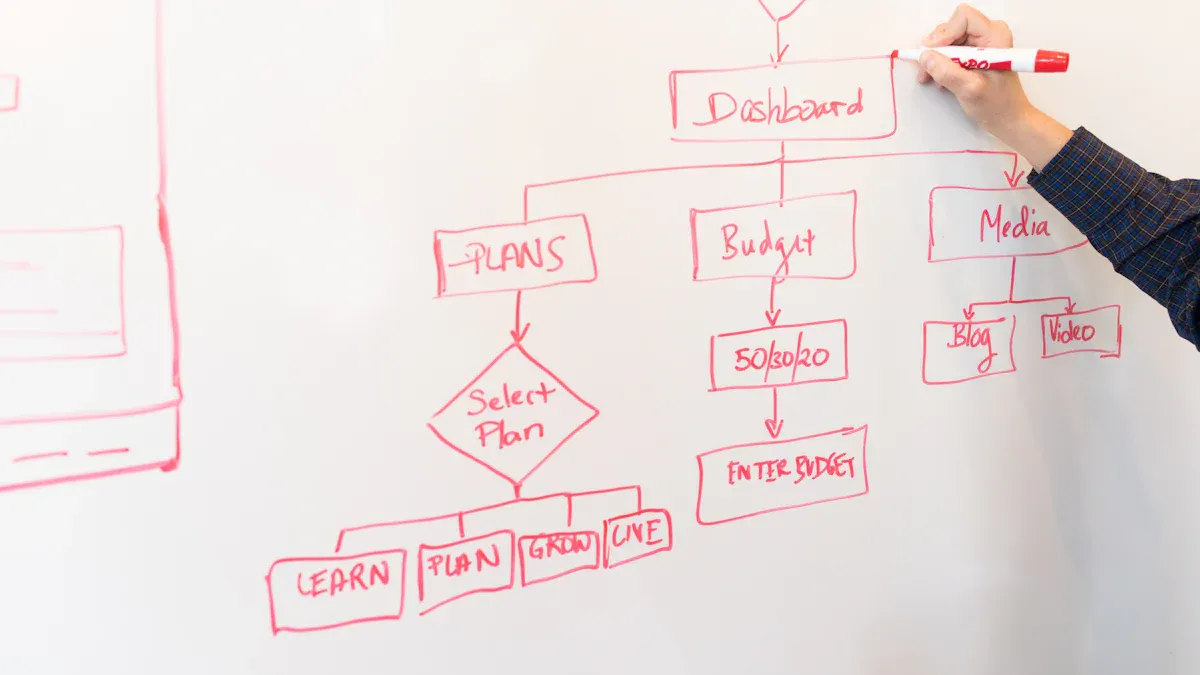
Step-by-Step Selection Checklist
A clear decision framework helps organizations choose the best business process improvement methodology. Leaders can follow these steps to guide their selection:
Define the Problem Type
Teams start by identifying the main issue. They classify the problem as a quality concern, waste, or another challenge. This step sets the direction for the entire process.Assess Organizational Readiness
Leaders evaluate if the organization can handle change. They consider team size, available resources, and the current level of expertise.Match to Industry Context
Teams review the needs of their industry. They select methodologies that fit the sector and the nature of the problem.Consider Combining Methodologies
Sometimes, using more than one approach works best. Teams explore hybrid solutions to address complex challenges.Identify Goals and Priorities
Leaders define strategic objectives and operational priorities. Clear goals help teams stay focused during improvement efforts.Assess Resources and Expertise
Teams check if they have the budget and skills needed for the chosen methodology.Evaluate Culture and Structure
Leaders reflect on the organization’s culture and leadership style. They ensure the selected methodology fits the company’s way of working.
A structured checklist ensures that teams make informed decisions and select a methodology that matches their unique needs.
Assessing Organization Size and Complexity
Organization size and process complexity play a key role in methodology selection. Large companies often need scalable solutions, while smaller teams may prefer simpler methods. Leaders should review several criteria before making a choice.
Criteria | Description |
|---|---|
Alignment with Objectives | The methodology should match the main goals of the organization. |
Scalability | The chosen approach must support growth and future needs. |
Complexity | The method’s difficulty level should fit the team’s experience and skills. |
Required Expertise | Teams must have or develop the skills needed for implementation. |
Monitor and Adjust | Leaders should review progress regularly and make changes as needed. |
Teams in large organizations may choose Six Sigma or BPR for their structured and scalable nature. Smaller companies often select Lean or Kaizen for their simplicity and ease of adoption. Leaders must match the complexity of the methodology to the skills and experience of their teams.
Regular monitoring and adjustment help organizations sustain improvements and respond to new challenges.
Aligning with Business Goals
Selecting the right methodology requires a strong connection to business goals. Leaders must ensure that the chosen approach supports both strategic and operational objectives.
Teams should match the methodology to the company’s primary goals. For example, Agile works well for fast delivery, while Six Sigma suits error reduction.
Leaders need to evaluate the nature of the problem, the scale of change required, and the organizational context.
A clear link between objectives and methodology increases team focus and effectiveness.
Before making a decision, leaders should ask:
Does the methodology support the company’s long-term vision?
Will it address the most critical issues?
Can it deliver results that matter to customers and stakeholders?
When organizations align their methodology with business goals, they improve their chances of success and create lasting value.
Evaluating Technology Readiness
Technology readiness plays a critical role in the success of business process improvement. Organizations must assess their digital capabilities before selecting a methodology. Many transformations fail because teams overlook this step. Leaders need to understand the current state of technology and how it supports business goals.
A thorough evaluation helps teams avoid common pitfalls. For example, 70% of business transformations do not achieve their intended results. Software projects often face delays and budget overruns. Only 16.2% finish on time and within budget. IT employees spend 35% of their time on administrative tasks, which slows down improvement efforts.
Teams can follow a structured approach to evaluate technology readiness:
Define the Goal
Leaders clarify the purpose of the transformation. They identify what the organization wants to achieve and how technology will support these objectives.Identify Customer Benefits
Teams consider how the transformation will improve customer experience. They align technology upgrades with customer needs.Assess Areas for Change
Leaders review current processes and pinpoint where technology can drive improvement. This step highlights gaps and opportunities.Evaluate Internal Capabilities
Teams decide if they have the skills and resources to manage the transformation. They consider whether to handle changes internally or seek external support.
A careful assessment of technology readiness increases the chances of successful process improvement. Leaders who understand their digital strengths and weaknesses make better decisions.
Organizations should also review the following factors:
Existing software and hardware infrastructure
Data management and analytics capabilities
Employee digital skills and training needs
Integration with current workflows
Factor | Impact on Process Improvement |
|---|---|
Software Infrastructure | Supports automation and efficiency |
Data Analytics | Enables informed decision making |
Employee Skills | Drives adoption and effective use |
Workflow Integration | Ensures smooth transition and results |
Teams that evaluate technology readiness create a strong foundation for improvement. They reduce risks and maximize the benefits of their chosen methodology. Leaders who invest in digital tools and training empower their teams to achieve lasting results.
Implementation and Common Pitfalls
Change Management
Change management forms the backbone of successful business process improvement. Teams must prepare a clear approach before starting any initiative. They collaborate to develop a strategy, define objectives, and outline steps for achieving desired outcomes. Effective change management equips people with knowledge about new technologies and processes. Training and coaching bridge the gap between knowing what to do and being able to do it.
A typical change management process includes three phases:
Phase | Description |
|---|---|
Prepare Approach | Teams develop a change strategy, set objectives, and plan steps for desired outcomes. |
Manage Change | Leaders equip people, track performance, and adjust strategies to enhance adoption. |
Sustain Outcomes | Teams establish plans for long-term adoption and review performance to maintain outcomes. |
Communication plays a vital role. Leaders must ensure all employees understand the reasons for change and its impact. Building awareness helps stakeholders know their roles and the progress of the initiative. Neglecting the human aspect of change can lead to resistance and low morale. Teams that focus on change management see higher adoption rates and better results.
Stakeholder Engagement
Stakeholder engagement drives the success of process improvement projects. Teams start by defining stakeholders and their roles. They analyze interests, expectations, and influence. Planning how to engage and communicate with stakeholders ensures everyone stays informed and involved.
To maximize engagement, teams follow four steps:
Define stakeholders and their roles.
Analyze interests, expectations, and influence.
Plan engagement and communication strategies.
Implement the plan and measure effectiveness.
Continuous communication and feedback keep stakeholders satisfied and supportive throughout the project lifecycle. When teams involve key stakeholders, they reduce resistance and increase buy-in. Ignoring stakeholder engagement can lead to confusion and missed opportunities.
Tip: Regular updates and feedback sessions help maintain trust and transparency with stakeholders.
Measuring Success
Measuring success helps organizations evaluate the effectiveness of process improvement initiatives. Teams use a variety of metrics to track progress and outcomes. Operational efficiency indicators, such as cycle time reductions and productivity improvements, quantify gains. Project completion rates show whether teams meet targeted outcomes.
Financial benefits, including cost savings and return on investment, reveal the impact on the bottom line. Time-based metrics assess project duration and implementation speed. Customer satisfaction surveys and Net Promoter Scores gauge how well processes meet user needs. Employee engagement metrics, such as satisfaction surveys and turnover rates, show the effect on morale.
Metric Type | Description |
|---|---|
Operational Efficiency | Cycle time, productivity improvements |
Project Completion | Tracking completion and targeted outcomes |
Financial Benefits | Cost savings, ROI |
Customer Satisfaction | Surveys, NPS |
Employee Engagement | Satisfaction surveys, turnover rates |
Business Growth | Revenue growth, market share |
Teams that define clear, measurable goals and establish metrics for success create a foundation for continuous improvement. Without these measures, organizations may struggle to evaluate effectiveness and sustain progress.
Avoiding Mistakes
Mistakes during business process improvement can slow progress and reduce the impact of new methodologies. Teams must recognize common pitfalls and use proven strategies to prevent them. Leaders who focus on preparation and ongoing support help their organizations achieve better results.
One of the most important steps involves training. Employees need proper training to understand new methodologies. Training sessions build confidence and reduce confusion. Teams who receive clear instructions make fewer errors and adapt more quickly.
Communication also plays a key role. Leaders should explain the reasons for changes and keep teams updated throughout the process. When everyone understands the purpose and expected outcomes, they feel more engaged and motivated. Clear communication prevents misunderstandings and helps teams stay aligned.
Monitoring progress ensures that improvements last. Teams should review key metrics regularly. Tracking performance allows leaders to spot issues early and make timely adjustments. This approach keeps the project on track and supports continuous improvement.
Aligning the methodology with the team's culture is crucial. If the chosen approach fits the organization's values and working style, employees feel more comfortable and morale stays high. Teams who experience a cultural mismatch may resist change or lose motivation.
Establishing clear metrics helps teams understand what success looks like. Leaders should set key performance indicators (KPIs) before starting the project. KPIs provide a roadmap for measuring progress and guide decision-making. Teams who know their targets can focus their efforts and celebrate achievements.
Pilot testing offers valuable insights. Before a full rollout, leaders can test the methodology in a smaller project. Pilot tests reveal practical challenges and allow teams to refine their approach. This step reduces risk and increases the chances of success when scaling up.
Tip: Teams who combine training, communication, and pilot testing build a strong foundation for improvement.
The table below summarizes best practices for avoiding mistakes:
Best Practice | Benefit |
|---|---|
Training | Reduces confusion and errors |
Clear Communication | Keeps teams informed and engaged |
Monitoring Progress | Sustains improvements and enables action |
Cultural Fit | Maintains morale and effectiveness |
Clear Metrics | Defines success and guides decisions |
Pilot Testing | Reveals challenges and refines approach |
Teams who follow these best practices avoid common mistakes and achieve lasting improvements. Leaders who invest in preparation and support create a culture of success and continuous learning.
Next Steps and Resources
Practical Steps for Evaluation
Organizations that want to improve their processes need a clear plan. Teams and systems often start by identifying their goals. They form cross-functional groups to bring together different perspectives. These groups analyze current workflows to find areas that need change. Running a pilot test helps teams see how new methods work in practice. Measuring outcomes gives leaders data to decide if the change is successful. After a successful pilot, teams scale up and refine the process. Sustaining improvements requires regular reviews and adjustments.
Identify goals for process improvement.
Form a cross-functional team to gather insights.
Analyze current workflows for inefficiencies.
Run a pilot test to evaluate the new methodology.
Measure outcomes using clear metrics.
Scale up and refine based on feedback.
Sustain improvements with ongoing monitoring.
Teams that ask the right questions clarify project purpose, identify stakeholders, and specify expected outcomes. This approach ensures all perspectives are considered and increases the chance of success.
Recommended Tools and Platforms
Modern business process improvement relies on advanced tools and platforms. Systems and teams use these solutions to automate tasks, analyze data, and collaborate efficiently. Leaders select platforms that match their needs and support integration with existing workflows.
Appian: Builds custom applications with low-code features.
Pega: Uses artificial intelligence for decision-making.
FlowWright: Offers robust security, governance, and AI capabilities.
Workato
Boomi
Zapier
Mulesoft
Many platforms provide features such as visual process modeling, no code or low code automation, business rule engines, integration capabilities, real-time analytics, collaboration tools, and role-based access control.
Feature | Benefit for Teams and Systems |
|---|---|
Visual Process Modeling | Simplifies workflow design |
No Code/Low Code Automation | Speeds up implementation |
Business Rule Engine | Ensures consistency |
Integration Capabilities | Connects with existing systems |
Real Time Analytics | Tracks progress and outcomes |
Collaboration Tools | Improves teamwork and communication |
Role Based Access Control | Protects sensitive information |
Clients at systems and teams achieve results by selecting tools that fit their needs and support continuous improvement.
Further Reading and Training
Leaders and teams who want to deepen their knowledge can explore additional resources. Training programs and online courses help build skills in process improvement methodologies. Reading industry guides and case studies provides practical examples and insights.
Online courses on Six Sigma, Lean, and Agile
Industry publications and whitepapers
Webinars from leading process improvement experts
Case studies from successful organizations
Certification programs for process improvement professionals
Those who want to learn more or need guidance can reach out for support. Continuous learning helps teams stay ahead and achieve lasting results.
Aligning the right methodology with business goals, challenges, and emerging trends remains essential. It helps organizations achieve lasting improvements. Leaders should use the decision framework and resources shared in this guide. Regular evaluation and adaptation ensure continuous progress. Making informed, strategic choices supports sustainable process improvement and long-term success.
FAQ
What is the main goal of business process improvement?
Business process improvement aims to make workflows more efficient. Teams seek to reduce waste, increase quality, and deliver better results for customers.
How does digital transformation affect methodology selection?
Digital transformation introduces new tools and technologies. Teams must choose methodologies that support automation, data analysis, and integration with digital systems.
Which methodology works best for small businesses?
Lean and Kaizen suit small businesses. These methods require less training and resources. Teams can start with simple changes and see quick results.
Can organizations combine different methodologies?
Yes, organizations often blend methodologies. Teams use hybrid approaches to address complex challenges. Combining methods helps meet unique needs.
How do teams measure success in process improvement?
Teams use metrics like cycle time, cost savings, and customer satisfaction. Clear goals and regular reviews help track progress and ensure improvement.
What challenges do teams face during implementation?
Teams face resistance to change, lack of training, and unclear goals. Leaders must communicate well and provide support to overcome these challenges.
Is specialized training required for Six Sigma?
Six Sigma requires specialized training. Teams learn statistical tools and structured frameworks. Certification programs help build necessary skills.
How often should organizations review their improvement strategies?
Organizations should review strategies regularly. Teams monitor progress, adjust methods, and respond to new challenges to maintain continuous improvement.


