Six Sigma Process Mapping for 2026 Success
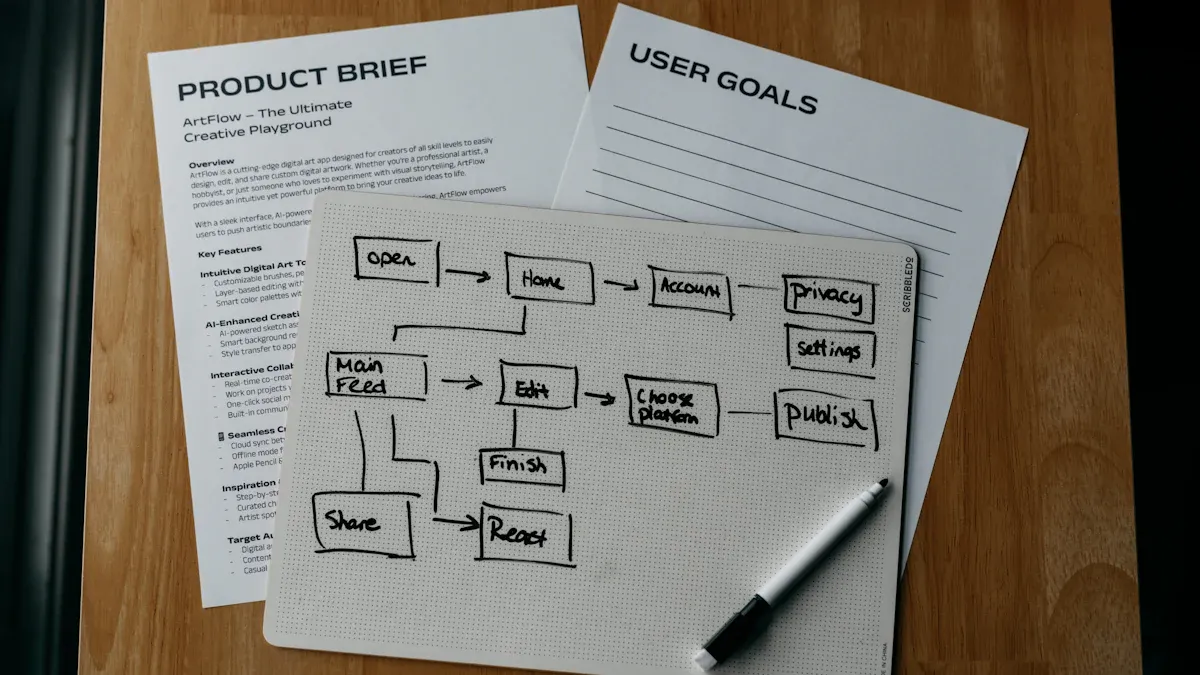
In 2026, Six Sigma Process Mapping shapes how organizations achieve business success. Companies face urgent challenges, such as the need for consistency, precision, and smarter Hiring Systems. For example, a global manufacturer recently reduced cycle times and improved efficiency by applying Optimization Steps to its production process. The table below shows how leading organizations have benefited from this approach:
Company/Organization | Impact of Six Sigma | Key Outcomes |
|---|---|---|
Catalent Pharma Solutions | Enhanced production and reduced mistakes | Improved efficiency, cost reduction |
Ford | Waste reduction and customer satisfaction | $2.19 billion in waste reduction, $1 billion in savings, 5-point increase in customer satisfaction |
3M | Pollution prevention and waste reduction | $1 billion saved, 61% decrease in volatile air emissions |
Process mapping helps teams clarify workflows, reduce waste, and deliver value to Customers. Research shows that clear process maps support continuous improvement and competitive advantage in dynamic markets:
Process mapping reduces cognitive overload and improves productivity.
Standard workflows reveal bottlenecks and help teams focus on value-added activities.
Organizations that document processes can automate, scale, and align with quality goals.
Key Takeaways
Six Sigma Process Mapping helps organizations improve efficiency and reduce waste, leading to significant cost savings.
Clear process maps allow teams to identify bottlenecks and focus on value-added activities, enhancing productivity.
Engaging stakeholders early in the mapping process builds trust and ensures everyone understands the project goals.
Using tools like SIPOC diagrams and value stream maps helps teams visualize processes and spot areas for improvement.
Continuous improvement is key; organizations should regularly review and update process maps to adapt to changes.
Technology, such as AI and cloud platforms, can streamline process mapping and enhance collaboration among teams.
Focusing on data quality ensures accurate insights, which leads to better decision-making and process improvements.
By removing non-value-added steps, teams can create smoother workflows that deliver better results for customers.
Why Six Sigma Process Mapping Matters
Meeting 2026 Business Challenges
Businesses in 2026 face new pressures. They must adapt quickly, reduce waste, and deliver high-quality products. Six Sigma Process Mapping helps organizations meet these challenges by making every step in a process visible. Teams can spot problems, remove unnecessary steps, and improve how they work. The table below shows how process mapping addresses common business challenges:
Evidence Description | Impact on Business Challenges in 2026 |
|---|---|
Continuous improvement through small, incremental changes. | Enhances operational efficiency and quality. |
Stakeholder involvement during mapping and improvement activities. | Leads to more comprehensive improvements. |
Use of SIPOC diagrams for broad understanding before detailed analysis. | Facilitates better decision-making and process clarity. |
Testing changes with pilot tests and simulations. | Reduces risk and prevents costly mistakes. |
Continuous monitoring using data collection tools. | Allows for early issue detection and timely adjustments. |
Standardizing improvements to lock in gains and reduce variation. | Minimizes errors and waste, ensuring high-quality outcomes. |
Process mapping enhances communication and simplifies complex operations. | Reduces misunderstandings and promotes accountability. |
Visualization of processes to identify inefficiencies. | Keeps teams aligned and focused on improvement goals. |
Six Sigma Process Mapping gives teams a clear picture. They can see where value is added and where waste occurs. This approach helps companies stay competitive in a fast-changing world.
Strategic Alignment with Six Sigma
Organizations use Six Sigma Process Mapping to connect daily work with big goals. Leaders set targets for cost, quality, and customer satisfaction. Teams then use process maps to find ways to reach these targets. Recent studies show that:
Companies set measurable goals, such as reducing cycle time by 30% or improving quality by 40%.
Optimized processes can cut task completion time by up to 60%.
Streamlined workflows often reduce operational costs by 25-30%.
Quality improvements can lead to a 50% drop in errors and a 30% rise in customer satisfaction.
Process mapping keeps everyone focused on what matters most. It helps teams measure progress and adjust their actions to meet business objectives.
Role in Lean and Digital Transformation
Lean and digital transformation projects start with understanding current processes. Six Sigma Process Mapping gives a clear view of how work happens. This clarity makes it easier to choose the right technology and avoid mistakes. The table below highlights how process mapping supports these efforts:
Evidence Type | Description |
|---|---|
Process Mapping | Lean Six Sigma starts with mapping and analyzing existing processes, which clarifies what needs to change before technology adoption. |
Data-Driven Decision Making | Lean Six Sigma fosters a culture of data analysis, ensuring tech changes are measurable and based on evidence. |
Customer-Centric Approach | The voice of the customer is central to Lean Six Sigma, ensuring that technology solutions address real customer needs. |
Teams use process maps to spot waste, improve flow, and make better decisions. This approach supports both lean thinking and digital upgrades, helping organizations deliver more value to customers.
What Is Six Sigma Process Mapping
Process Mapping Basics
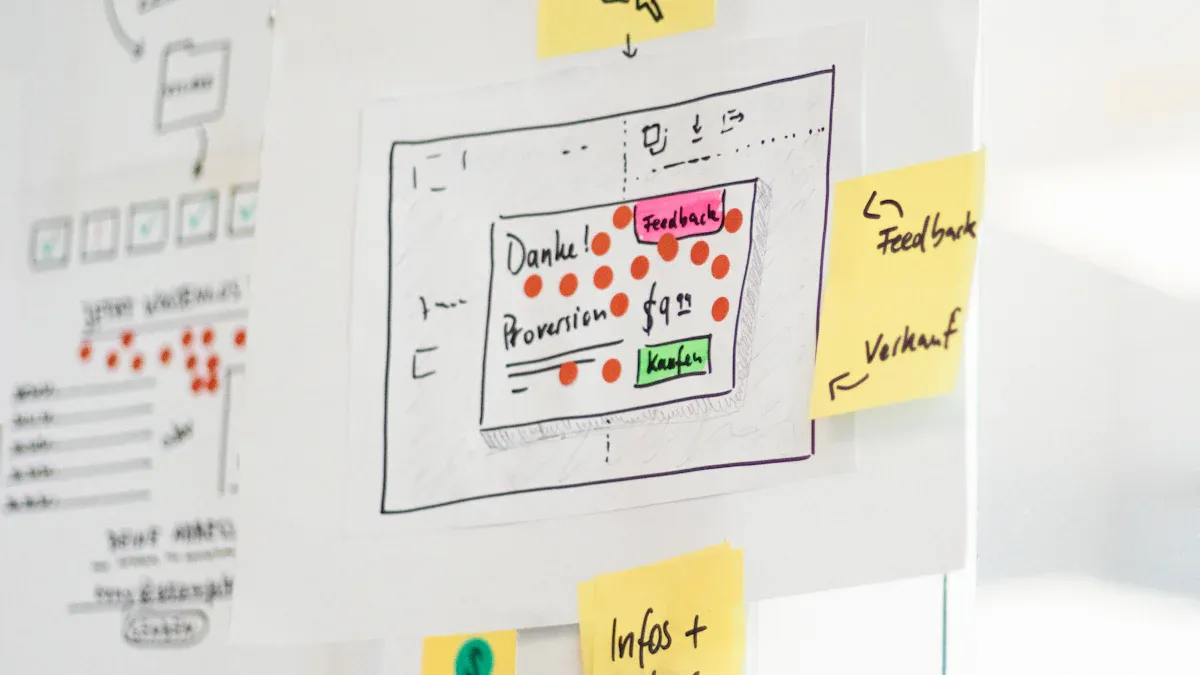
Process mapping gives teams a visual way to understand how work flows in an organization. Each map shows the steps, decisions, and paths that a process follows from start to finish. Teams use these maps to see where work begins, how it moves, and where it ends. This approach helps everyone speak the same language and spot areas for improvement.
Key components of process mapping include:
Inputs that start the process
Outputs that result from the process
Steps that describe each action or decision
Workflow illustrations that show the order of activities
Common symbols that make maps easy to read
Details for multiple paths, decisions, and rework loops
A clear process map helps teams find gaps, reduce confusion, and improve results.
Key Principles in Six Sigma
Six Sigma Process Mapping follows several core principles. Teams use these principles to guide improvement projects and ensure lasting results. The Six Sigma methodology includes two main frameworks: DMAIC and DMADV.
DMAIC helps teams understand existing processes. They use it to find the root causes of problems and make targeted improvements.
DMADV guides teams when they need to design new processes. Mapping helps identify requirements and create solutions that meet those needs.
Both frameworks rely on process mapping to visualize work, set goals, and measure progress. Teams can use these maps to align their actions with business objectives.
Tip: Teams that use process mapping in Six Sigma projects often find it easier to communicate and solve problems together.
Value-Added vs. Non-Value-Added Activities
A key goal of process mapping is to separate value-added activities from non-value-added ones. Value-added activities transform inputs into outputs that meet customer needs. Customers are willing to pay for these steps, and teams perform them correctly the first time.
Non-value-added activities do not help create the product or service. These steps do not provide value to the customer. They use resources and time without improving customer satisfaction.
Teams use process maps to:
Identify which steps add value
Spot activities that waste time or resources
Focus improvement efforts on what matters most
By removing non-value-added steps, organizations can streamline workflows and deliver better results.
Types of Process Maps in Six Sigma
SIPOC Diagrams
SIPOC diagrams stand as one of the most common tools in Six Sigma projects. SIPOC stands for Suppliers, Inputs, Process, Outputs, and Customers. Teams use these diagrams to capture a high-level view of a process before diving into details. SIPOC diagrams help everyone understand the boundaries and key elements of a process.
Key features and benefits of SIPOC diagrams include:
Improves communication and collaboration among teams by providing a shared understanding of the process.
Reduces defects and variations by identifying potential sources of variation in processes.
Aligns project scope and goals with customer requirements and organizational objectives.
Defines business processes in a high-level manner that is easy to understand.
Builds stakeholder alignment at the beginning of process mapping.
Clarifies processes by identifying critical information such as supplier contacts and project specifications.
Teams often use SIPOC diagrams at the start of a project to set clear expectations and ensure everyone agrees on the process scope.
When to Use SIPOC
SIPOC diagrams work best when teams need to:
Launch a new process improvement project.
Align stakeholders on the process scope and boundaries.
Clarify who supplies inputs and who receives outputs.
Identify key requirements from customers and suppliers.
SIPOC diagrams provide a foundation for deeper analysis. They help teams avoid confusion and set the stage for more detailed mapping.
Value Stream Maps
Value stream maps (VSM) give teams a powerful way to visualize every step in a process. These maps show how materials and information flow from start to finish. Teams use VSM to spot waste, measure performance, and design better processes.
The most common types of process maps in Six Sigma projects include:
SIPOC diagrams
Value stream maps
Swimlane diagrams
Flowcharts
Deployment flowcharts
Value stream maps offer several benefits:
Benefit | Description |
|---|---|
Waste Identification | Visualizes all eight types of waste in the process. |
Flow Optimization | Reveals bottlenecks and flow disruptions. |
Lead Time Reduction | Identifies opportunities to reduce total lead time. |
Improvement Prioritization | Helps focus efforts on highest-impact areas. |
Team Alignment | Creates shared understanding of current and future state. |
Standardization | Establishes consistent improvement approach. |
The current state VSM provides baseline measurements such as process cycle times, lead times, inventory levels, quality metrics, and resource utilization data. These metrics help teams find inefficiencies and target areas for improvement.
Future state VSM guides solution design by focusing on process redesign and optimization, waste elimination initiatives, flow improvement implementations, and the development of standard work.
Identifying Waste
Value stream maps make it easy to see where waste occurs. Teams can quickly spot delays, excess inventory, and unnecessary steps. By focusing on these areas, organizations can streamline processes and deliver better results.
Swimlane Flowcharts
Swimlane flowcharts, also called swimlane diagrams, organize process steps into lanes. Each lane represents a person, team, or system. This format makes it easy to see who does what at each stage.
Swimlane flowcharts help clarify roles and responsibilities. They eliminate confusion by showing which tasks belong to which individuals or departments. Teams can use these diagrams to improve accountability and reduce overlap.
Feature | Benefit |
|---|---|
Clear responsibility assignment | Outlines who is responsible for each task, reducing ambiguity. |
Separation of process steps by role | Makes it easy to see which steps belong to which individuals or departments. |
Visualization of complex relationships | Highlights how different users or systems interact within a process. |
Clarifying Roles
Swimlane flowcharts provide an easy-to-read visualization of roles and responsibilities. Teams can quickly identify handoffs, gaps, and overlaps. This clarity helps everyone focus on their specific tasks and supports smoother collaboration.
Detailed Flowcharts
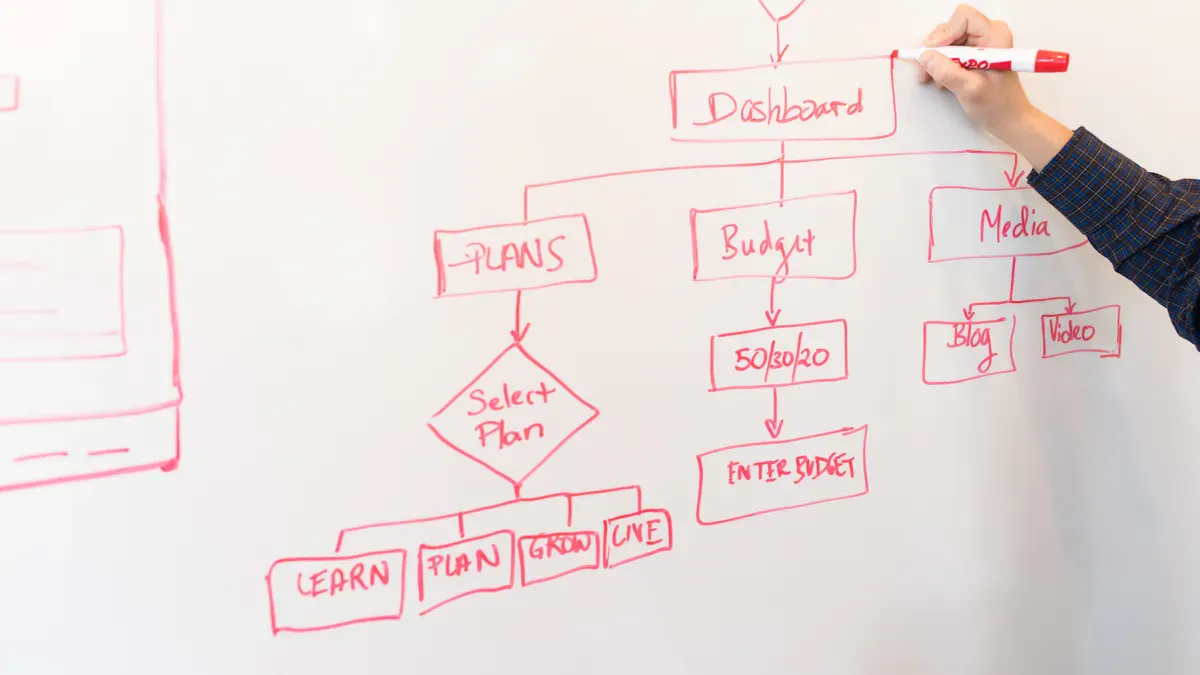
Detailed flowcharts help teams visualize complex processes in Six Sigma projects. These diagrams break down each step, decision, and path, making it easier to understand how work flows. Teams use detailed flowcharts to map processes that involve many actions, multiple departments, or intricate decision points. This approach supports clear communication and helps everyone see the big picture.
A detailed flowchart uses standard symbols to represent actions, decisions, and connections. Each symbol shows a specific type of step, such as a task, a decision, or a start and end point. Teams can follow the flowchart to trace the process from beginning to end. This method reveals how tasks move through the system and where problems might occur.
The advantages of using detailed flowcharts for mapping complex processes include:
Advantage | Description |
|---|---|
Clear Visualization | Flowcharts break down intricate processes into individual steps, allowing for easy understanding. |
Enhanced Process Understanding | They serve as powerful visual aids that help teams grasp the essence of a process quickly. |
Identification of Inefficiencies | Mapping out processes reveals potential bottlenecks and redundancies, aiding in optimization efforts. |
Teams often use detailed flowcharts when they need to analyze processes with many steps or when they want to find hidden inefficiencies. These diagrams help identify where delays, errors, or unnecessary actions occur. By mapping complex steps, teams can target improvements and streamline operations.
Mapping Complex Steps
Mapping complex steps requires careful attention to detail. Teams start by listing every action, decision, and outcome in the process. They then arrange these steps in order, connecting them with arrows to show the flow. Each decision point gets a symbol, making it easy to see where choices affect the process.
Teams review the flowchart to spot bottlenecks, redundancies, and areas for improvement. They look for steps that do not add value or that cause delays. This method helps teams optimize the process and improve efficiency.
Five Levels of Process Mapping
Six Sigma uses five levels of process mapping to analyze and improve workflows. Each level focuses on a different aspect of the process:
Define the problem, area for improvement, or customer requirements.
Measure performance of the current process.
Analyze the process to determine the root cause of defects or inefficiencies.
Improve performance by eliminating the root cause.
Control the improved process to ensure high performance.
Teams apply these levels to find automation opportunities, map material handling, recognize duplication, identify redundancy, and locate decision points. They also look for delays, rework loops, and distinguish between value-added and non-value-added steps. This structured approach helps teams make lasting improvements.
Note: Teams that use all five levels of process mapping can achieve greater efficiency and quality. They build processes that meet customer needs and support continuous improvement.
If readers want to learn more about Six Sigma process mapping or need guidance for their own projects, they can reach out for more information.
Creating a Six Sigma Process Map
Define Scope and Objectives
Teams begin Six Sigma Process Mapping by defining the scope and objectives. This step sets the direction for the project and ensures everyone understands the purpose. Clear boundaries help teams avoid confusion and keep the mapping effort manageable. They decide where the process starts and ends, specifying which steps, departments, or functions the map will include.
A structured approach helps teams clarify goals and focus on what matters most:
Define the project goal to clarify the purpose of the process map.
List knowns and unknowns to identify areas needing further investigation.
Ask relevant questions based on the DMAIC framework, such as "What are the key inputs and outputs?" and "Where do inefficiencies occur?"
Sequence and link these questions logically to guide the mapping process.
Identify tools, such as SIPOC diagrams or swimlane charts, that will best represent the process.
Teams regularly review the project charter to stay aligned with objectives. They implement a formal change control process for any proposed changes. Educating stakeholders about the importance of sticking to the agreed scope helps maintain focus.
Note: Defining boundaries prevents scope creep and keeps the project on track.
Identify and Sequence Steps
After setting the scope, teams identify and sequence the steps in the process. They include participants with detailed process knowledge and subject matter experts to ensure accuracy. Stakeholder engagement remains important throughout the mapping effort.
A step-by-step approach supports clarity and collaboration:
Identify the right participants with process knowledge.
Engage stakeholders continuously by updating stakeholder maps.
Foster collaboration through open communication, visual management tools, and role clarity.
Define clear process boundaries, specifying where the process starts and ends.
Use mapping techniques like SIPOC, Thought Process Maps, and flowcharts to visualize and sequence steps.
Avoid scope creep by reviewing the project charter and communicating scope clearly.
Implement changes with clear communication, task assignment, training, and progress monitoring.
Review and sustain improvements by tracking balanced metrics and conducting regular reviews.
Teams use visual tools to sequence steps and clarify roles. They assign tasks and monitor progress using dashboards or other tracking tools. Regular reviews help sustain improvements and support continuous improvement.
Gather Data and Team Input
Teams gather data and input from all relevant members to build an accurate process map. They use SIPOC diagrams to pinpoint key process elements. A critical-to-quality tree highlights the most important output measures. Teams identify available data and determine what is still needed.
They decide if the data is continuous, like time or weight, or discrete, like counts. Selecting the right forms and tools for collecting and visualizing data supports effective analysis. Teams plan how much data is necessary to spot trends and patterns. They define how to measure each item, including clear definitions and target values.
Checking measurement systems for consistency involves gauge repeatability and reproducibility studies. Teams choose between sampling and full data collection, using methods like random or stratified sampling to avoid bias. Planning how to display and analyze the data helps teams make informed decisions.
A Gemba walk means visiting the actual place where work happens. Teams observe the process firsthand, interview employees, and record observations using checklists or digital tools. This approach helps them see real issues and gather facts that data alone might miss.
Teams combine data analysis with team input to create a process map that reflects reality. This foundation supports effective improvement and ensures the map guides future actions.
Map the Current State
Teams begin by mapping the current state to understand how the process works today. This step establishes a baseline for performance and reveals the real workflow, not just what people assume happens. Mapping the current state helps teams see gaps, bottlenecks, and areas where the process does not match expectations.
Key techniques for mapping the current state include:
Creating visual diagrams such as flowcharts, SIPOC diagrams, value stream maps, and swimlane diagrams.
Using digital tools like Traxion, iGrafX Process, or SigmaFlow to build and analyze process maps.
Observing the process in action and collecting data on each step.
Comparing the actual process to documented procedures to highlight discrepancies.
Teams often discover differences between the process as described and the process as performed. Visualizing the process helps everyone see where improvements are needed.
Mapping the current state gives teams a clear picture of how work flows, where delays occur, and which steps add value. This foundation supports all future improvement efforts.
Analyze and Improve
After mapping the current state, teams analyze the process to find improvement opportunities. They use several analytical tools to identify bottlenecks, errors, and waste.
SIPOC diagrams provide a high-level overview of suppliers, inputs, process steps, outputs, and customers. This overview helps teams spot areas for improvement. Flowcharts break down each step, making it easier to detect where problems occur. Value stream maps focus on the flow of materials and information, highlighting waste and delays. Swimlane diagrams clarify responsibilities and show how tasks move between departments.
Teams review process maps with stakeholders to highlight steps that cause delays or errors. They use data to confirm problem areas and brainstorm solutions. Techniques like the 5 Whys and cause and effect diagrams help uncover root causes. Teams then refine the process map to reflect these insights.
SIPOC diagrams have led to measurable improvements, such as reducing dispensing errors in healthcare by 30% and increasing guest satisfaction in hospitality. High-level maps help teams align improvement efforts with strategic goals. Swimlane diagrams make cross-functional workflows clearer, helping teams streamline hand-offs and reduce confusion.
Digital mapping tools support real-time collaboration and easy updates. Features like drag-and-drop design and built-in analytics help teams measure process performance and track changes.
Design the Future State
Designing the future state involves creating a new process that solves current problems and meets business goals. Teams follow a structured approach to ensure the new process is effective and sustainable.
Analyze the current process to find pain points and inefficiencies.
Define clear goals and metrics for the improved process.
Involve stakeholders in brainstorming and planning to gather ideas and feedback.
Create a visual map of the new workflow, showing how tasks will flow and who will be responsible.
Validate the new process with stakeholders to check for feasibility and alignment with business needs.
Plan for implementation and change management to support a smooth transition.
Teams that design the future state with clear goals and strong stakeholder involvement build processes that deliver better results and adapt to changing needs.
A well-designed future state process map guides teams as they implement changes, monitor progress, and continue improving over time.
Validate and Implement
Teams must validate the process map before launching any changes. Validation checks the map for errors, missing steps, or unclear details. Stakeholders review the map to confirm that it matches real operations. They compare the map with project data and gather feedback from team members. This step ensures the process map is accurate and ready for use.
Teams often find that involving process owners and team members leads to better results. Stakeholders help spot mistakes and fill in gaps. Their input makes the process map more reliable.
Strategy | Description |
|---|---|
Engage process owners and team members in reviewing maps to ensure accuracy and completeness. | |
Regular Updates | Maintain updates to reflect changes in stakeholder relationships and project conditions. |
After validation, teams assign roles for each step in the new process. They deliver training sessions to explain new procedures. Training helps everyone understand their responsibilities and prepares them for the new workflow. Teams update documentation to reflect changes. Clear instructions and updated guides support smooth transitions.
Assign roles for each process step.
Deliver training sessions to explain new procedures.
Update documentation to reflect changes.
Set up tools and systems needed for new workflows.
Launch the improved process in a controlled environment.
Launching the improved process in a controlled environment minimizes risks. Teams test changes on a smaller scale. This approach helps identify issues early and ensures smoother transitions. Teams monitor the process closely and collect data to measure performance.
Monitoring Activity | Purpose | Example Metric |
|---|---|---|
Performance Tracking | Measure process efficiency and quality | Cycle Time |
Data Collection | Gather evidence of improvement | Defect Rate |
Feedback Sessions | Identify challenges and opportunities | Employee Suggestions |
Teams track metrics such as cycle time and defect rate. They hold feedback sessions to hear from employees. These activities help teams spot challenges and find new opportunities for improvement.
Minimizes risks by testing changes on a smaller scale.
Ensures smoother transitions by identifying issues early.
Reviewing and validating the process map ensures its accuracy and effectiveness. Teams examine the map for errors, inconsistencies, or missing details. They gather feedback from stakeholders and compare the map against project data to confirm its alignment with real-world operations.
Teams that validate and implement process maps build stronger workflows. They reduce mistakes and improve efficiency. Continuous monitoring and regular updates keep the process running smoothly.
Teams seeking more guidance on Six Sigma process mapping can reach out for additional information and support.
Best Practices for 2026
Leveraging Technology
In 2026, technology plays a key role in improving Six Sigma Process Mapping. Teams use advanced tools to automate tasks and analyze data. Artificial intelligence (AI) handles repetitive work, so experts can focus on solving complex problems. Machine learning finds patterns in data and predicts where issues might happen. This helps teams act before problems grow.
Cloud-based platforms allow teams to work together in real time. They can share process maps, collect data, and update information from anywhere. Digital twins, or virtual copies of real processes, let teams test changes without stopping actual operations. These advancements make process mapping faster and more accurate.
Advancement Type | Description |
|---|---|
Automate tasks and analyze data to predict issues accurately. | |
Digital Twins | Create virtual replicas for testing improvements without disrupting operations. |
Cloud-based Platforms | Enable real-time collaboration and data collection, improving mapping efficiency. |
Systems that use these technologies help teams and clients achieve better results. They reduce errors, speed up improvements, and support smarter decision-making.
Engaging Stakeholders
Stakeholder engagement is essential for successful process mapping. Teams involve stakeholders from the start. This builds trust and ensures everyone understands the project’s purpose. Clear communication helps stakeholders see the benefits of mapping. When teams listen to feedback, stakeholders feel valued and support the changes.
Teams use ongoing stakeholder mapping to track who is involved and how much influence they have. They categorize and prioritize stakeholders to focus on those with the most impact. Collaboration and feedback shape the process map, making it more effective.
Stakeholder buy-in reduces delays and increases cooperation.
Clear communication fosters trust and understanding.
Involving stakeholders in mapping makes them feel committed.
Recognition and transparency keep everyone informed and engaged.
Systems that prioritize stakeholder engagement see smoother projects and better outcomes. Clients benefit from clear processes and improved results.
Ensuring Data Quality
Accurate data is the foundation of effective process mapping. Teams set clear quality standards for all data they collect. They use validation rules to check for errors and missing information. Ongoing monitoring and audits keep data reliable over time.
Teams focus on five key areas: accuracy, completeness, consistency, timeliness, and validity. They check that data matches real-world actions and update records as needed. These practices help teams avoid mistakes and make better decisions.
Establish clear quality standards for all data.
Implement validation rules to catch errors early.
Monitor and audit data regularly.
Ensure data is accurate, complete, consistent, timely, and valid.
Systems that maintain high data quality support teams and clients in reaching their goals. Reliable data leads to better process maps and stronger results.
Fostering Continuous Improvement
Continuous improvement stands at the heart of Six Sigma process mapping. Organizations that succeed in 2026 do not treat improvement as a one-time event. They build habits and systems that encourage teams to look for better ways every day. This mindset helps companies adapt to change, solve problems quickly, and stay ahead of competitors.
Teams use several proven techniques to support ongoing improvement. The table below highlights some of the most effective methods:
Technique | Description |
|---|---|
Lean Six Sigma | Combines waste elimination with defect reduction, enhancing efficiency in processes. |
DMAIC | A structured approach (Define, Measure, Analyze, Improve, Control) for systematic problem-solving. |
Employee Engagement | Critical for successful implementation, ensuring that all team members are involved in the process. |
Measurement Systems | Essential for tracking progress and ensuring improvements are sustained. |
Supportive Culture | Fosters an environment conducive to continuous improvement initiatives. |
Lean Six Sigma blends two powerful ideas. Lean focuses on removing waste, while Six Sigma targets defects and errors. Together, they create processes that run smoothly and deliver high quality. Teams use Lean Six Sigma to find and fix problems before they grow.
DMAIC gives teams a clear path for solving problems. Each letter stands for a step: Define, Measure, Analyze, Improve, and Control. For example, a healthcare organization used DMAIC to reduce emergency room wait times. The team defined what "wait time" meant, measured how long patients waited, analyzed why delays happened, improved the process, and set up controls to keep results strong.
Employee engagement plays a key role in continuous improvement. When everyone takes part, teams find more ideas and spot issues faster. Leaders encourage staff to share suggestions and take ownership of changes. This involvement builds trust and makes improvements last.
Measurement systems help teams track progress. They collect data on key steps and outcomes. Reliable measurements show if changes work and help teams adjust when needed. Regular reviews keep everyone focused on goals.
A supportive culture makes continuous improvement possible. Leaders set the tone by rewarding new ideas and learning from mistakes. Teams feel safe to try new things and speak up when they see problems. This culture turns improvement into a daily habit.
Tip: Teams that review their process maps often find new ways to improve. Small changes add up over time and lead to big results.
In 2026, organizations that foster continuous improvement build strong, flexible processes. They respond quickly to new challenges and deliver better value to customers.
Benefits and Limitations
Efficiency and Cost Savings
Six Sigma process mapping drives efficiency and cost savings for organizations. Teams use mapping to visualize workflows, identify bottlenecks, and eliminate unnecessary steps. This approach reduces cycle times and lowers operational costs. Many clients have achieved measurable improvements by applying process mapping to their systems.
Organization | Application Area | Measurable Results and Improvements |
|---|---|---|
Aerospace Parts Manufacturer | Machining cycle time | 46% reduction in cycle time; 80% decrease in process variation; increased productivity and profitability. |
Ford Motors | Automotive manufacturing | $2.19 billion waste reduction; $1 billion cost savings; 5-point increase in customer satisfaction. |
GE Healthcare | Manufacturing defects | 62% reduction with $10.2 million savings. |
Teams often report:
40% reduction in production delays
30% reduction in order processing time
50% reduction in onboarding time
30% reduction in waste
20-50% improvement in cycle time
These results show that process mapping helps organizations streamline operations and maximize resources. Clients benefit from faster workflows and lower expenses, which strengthens their competitive position.
Quality and Customer Satisfaction
Process mapping improves quality and boosts customer satisfaction. Teams use maps to spot inefficiencies and implement targeted improvements. This leads to fewer defects and higher standards. Clients at both system and team levels have seen significant gains.
One intergovernmental organization identified risks and improvement opportunities, resulting in over two dozen process improvements and annual savings exceeding $5 million.
Improved process efficiency links directly to enhanced customer satisfaction and reduced costs.
Organizations visualize workflows, identify inefficiencies, and implement improvements, leading to streamlined operations and better customer satisfaction.
Teams also report:
25% reduction in customer complaints
15% decrease in product returns
30% reduction in undetected dispensing errors
20% decrease in hospital-acquired infections
70-90% reduction in defects
Clients achieve higher quality outcomes and deliver better experiences to their customers.
Collaboration and Communication
Six Sigma process mapping strengthens collaboration and communication within organizations. Teams use visual tools to clarify roles and responsibilities. Stakeholders converge to discuss and understand systems for the first time. This process helps them recognize gaps and prioritize interventions.
Outcome | Description |
|---|---|
Stakeholder Convergence | Enabled stakeholders to collaboratively discuss and understand systems. |
Acknowledgment of Gaps | Stakeholders recognized areas of misunderstanding in processes. |
Prioritization of Interventions | Allowed stakeholders to agree on and prioritize interventions. |
Improved Coordination | Enhanced coordination among stakeholders in the process. |
Formalized Data-Sharing Agreements | Established more efficient use of services and formalized data-sharing agreements. |
Teams benefit from improved coordination and formalized agreements. Clients see more efficient use of services and stronger communication across departments. Process mapping creates a shared understanding, which leads to better teamwork and lasting improvements.
Overcoming Common Challenges
Six Sigma process mapping offers many benefits, but teams often face obstacles during implementation. Understanding these challenges helps organizations prepare and respond effectively. The table below highlights some of the most common issues and proven solutions:
Challenge | Solution |
|---|---|
Lack of Clarity in Process Steps | Use structured problem-solving techniques like brainstorming, fishbone diagrams, and the 5 Whys. |
Resistance to Change | Implement effective change management strategies, including transparent communication and training. |
Overcomplication in Process Maps | Maintain simplicity by using clear language and limiting symbols to enhance understanding. |
Ensuring Stakeholder Buy-In | Engage stakeholders early through workshops and discussions to foster ownership and support. |
A lack of clarity in process steps can slow down improvement efforts. Teams address this by using structured tools. Brainstorming sessions encourage open discussion. Fishbone diagrams help teams find root causes. The 5 Whys technique guides teams to dig deeper into problems.
Resistance to change often appears when new processes are introduced. People may worry about new responsibilities or fear mistakes. Leaders can reduce resistance by communicating openly. Training sessions help employees understand the benefits of process mapping. When people see how changes improve their work, they become more supportive.
Overcomplicated process maps can confuse teams. Simple language and clear symbols make maps easier to read. Teams should avoid adding too many details or using complex symbols. A straightforward map helps everyone understand the process and spot areas for improvement.
Stakeholder buy-in is essential for success. Early engagement builds trust and encourages participation. Workshops and group discussions give stakeholders a voice. When people feel involved, they take ownership of the process and support changes.
Tip: Teams that address these challenges early often see faster results and stronger improvements.
Six Sigma process mapping works best when teams stay focused on clarity, simplicity, and communication. By using structured problem-solving, supporting employees, and involving stakeholders, organizations can overcome common obstacles and achieve lasting success.
Six Sigma Process Mapping helps organizations build strong systems for continuous improvement and competitive advantage in 2026. Teams can follow these steps:
Define clear goals and map current processes.
Use technology and engage stakeholders.
Focus on data quality and continuous improvement.
Teams that start or refine process mapping today will adapt faster and deliver better results. For more information, readers can reach out and learn how to improve their processes.
FAQ
What is Six Sigma process mapping?
Six Sigma process mapping shows how work flows in a company. Teams use diagrams to see each step, spot problems, and find ways to improve. This method helps everyone understand the process.
How does process mapping help reduce waste?
Process mapping helps teams find steps that do not add value. They remove these steps to save time and resources. This approach leads to less waste and better efficiency.
Which tools do teams use for process mapping?
Teams use SIPOC diagrams, value stream maps, swimlane flowcharts, and detailed flowcharts. Each tool helps visualize different parts of a process. Teams choose the best tool based on their needs.
Can technology improve process mapping?
Technology improves process mapping by automating tasks and analyzing data. Cloud platforms allow real-time collaboration. Digital twins let teams test changes without stopping real operations.
Why is stakeholder engagement important?
Stakeholder engagement builds trust and ensures everyone understands the project. Teams involve stakeholders early to gather feedback and support. This approach leads to smoother projects and better results.
What challenges do teams face with process mapping?
Teams face challenges like unclear steps, resistance to change, and overcomplicated maps. They solve these issues by using simple diagrams, clear communication, and structured problem-solving techniques.
How often should teams update process maps?
Teams should update process maps whenever changes occur. Regular reviews help keep maps accurate and useful. This habit supports continuous improvement and strong results.
Want to learn more about Six Sigma process mapping? Reach out for more information and guidance.


